In online travel, every booking is won or lost in comparison.
A traveller lines up hotels on various platforms, then books wherever they get the best deal. The gap between winning and losing that booking can be a few hundred rupees, and it can change by the hour.
According to Google and Kantar’s Travel Rewired report, Indian travellers reference an average of seven sources while planning a trip. In a market where travellers compare across search, OTAs, YouTube, and travel platforms before booking, price visibility is no longer a back-office revenue task; it is a conversion lever.
For Cleartrip, this made competitor pricing high-stakes decision. But manual price checks couldn’t keep pace with a market that never stops moving.
Without continuous visibility, the revenue team risked two costly outcomes - pricing too high and losing bookings, or discounting too deep and losing margin.
To fix this, Cleartrip partnered with mFilterIt to build a competitive intelligence system that moves as fast as the market does. See how it helped them.
The Cleartrip Case Study: Pricing at the Speed of the Market
The Challenge: Thousands of hotels and moving prices
On Google hotels, the same property can appear with prices from multiple OTAs on a single comparison screen. This makes price competitiveness instantly visible to the customer.
For Cleartrip’s hotels revenue team, that raised several hard questions:
With price variations being continuous for each of the thousands of hotels and different check-in dates, how do you compete?
How do you ensure that your pricing model doesn’t take a blanket approach, thereby reducing your conversions or cutting into profits?
And since travelers evaluate even your ratings, reviews, amenities and descriptions of the property, how do you know if you match up to your competitor?
Manual checks could not answer these at scale. Without continuous competitive intelligence, the team lacked a complete view of market pricing, competitor promotions, and listing quality.
The Approach: Two layers of competitive intelligence
A system that combined a wide view of the market with a deep view of the closest rival.
Layer 1: The market benchmark
The pricing intelligence and analysis tool continuously monitored 45,000+ distinct hotel properties on Google Hotels across multiple check-in dates, and the coverage was not capped.
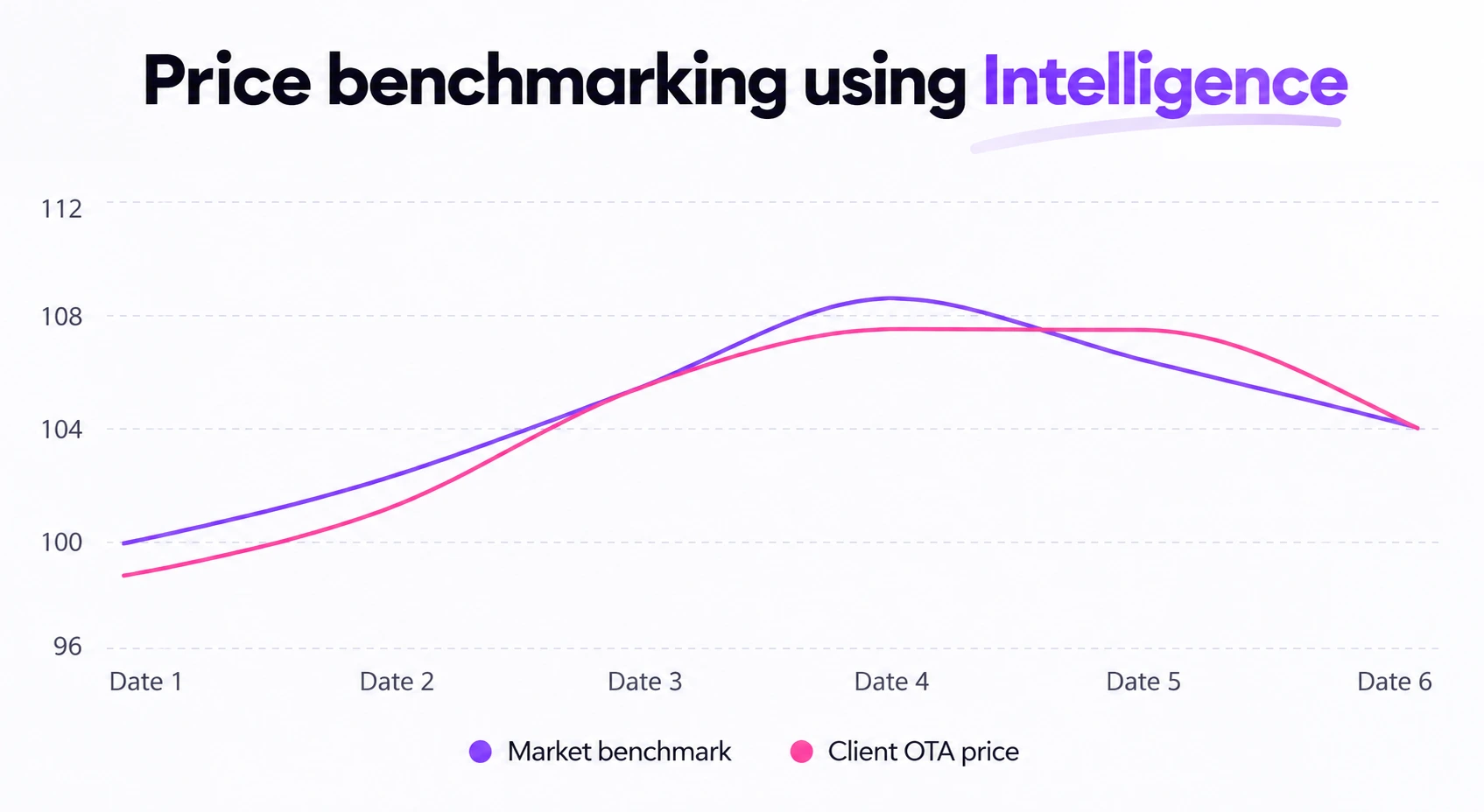
This gave Cleartrip its price position against every competing OTA, along with pricing trends across travel dates. The Google Hotels dataset served as the primary market benchmark for pricing decisions.
Layer 2: The competitor deep dive
For 5,000+ strategically selected hotels, our tool tracked Cleartrip’s largest OTA competitor in detail:
Pricing intelligence: Selling price, coupons and promotional offers
Content intelligence: Property descriptions, ratings, review counts, amenities and hotel highlights
The second layer is where the thinking shifts. Cleartrip was no longer only asking “Are we cheaper?” It was also asking, “Is our listing more convincing?”
The Foundation: Data you can trust at scale
mFilterIt’s platform switches between multiple data collection methods, backed by dynamic network routing and failover infrastructure, so monitoring continues even when one method is temporarily restricted. For Cleartrip, that meant consistent daily market visibility, more complete data, and faster detection of competitor price changes.
The Impact: From reactive to data - driven pricing strategy
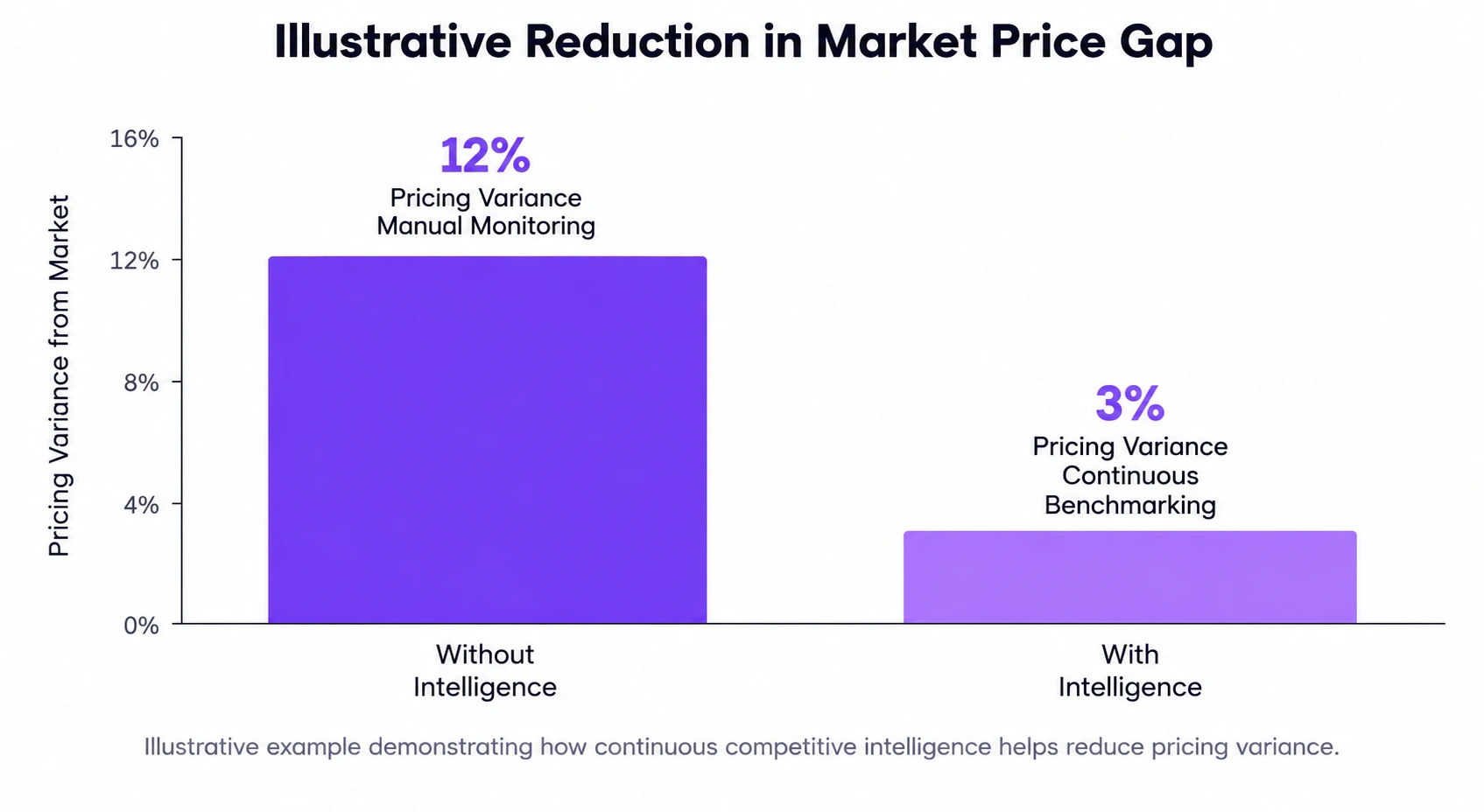
Faster competitive response: Pricing teams now receive structured competitive intelligence instead of relying on manual checks, so they can react to market moves quickly.
Discounts only where they are needed: Property-level adjustments mean discounts go where competitive pressure exists, which reduces unnecessary promotional spend and protects margin.
Sharper commercial decisions: Visibility into the competitor’s pricing strategy, offers and property presentation helps commercial teams spot opportunities to improve.
Stronger listings: Benchmarking descriptions, ratings, reviews and amenities shows where listings fall behind, which supports customer confidence and booking decisions.
Scale without manual effort: Tens of thousands of properties and 5,000+ competitor listings are evaluated continuously, with no manual tracking.
The Real Takeaway: Pricing is Never Seen Alone
Ratings, review counts, amenities and highlights carry equal importance as price and coupons, because a booking is decided by the whole listing, not by a single number.
The same holds for every ecommerce and quick commerce brand. Your price only wins when the product is in stock, easy to find, convincingly presented, and sold by the right seller. Meanwhile Competitor pricing tells you what is happening on the shelf. The other signals tell you why you are winning or losing.
A centralized pricing intelligence tool is still a must. But on its own, it shows one part of a much bigger picture.
Five Signals an Advanced Ecommerce Intelligence Solution Cover
Signal | What price-only tracking misses | Why it matters |
Availability | Your SKU is out of stock in key pin codes, or a competitor is | The best price on an empty shelf sells nothing. A competitor’s stock-out is your opening |
Discoverability | Where you rank in search and how much of the shelf you own | A competitive price on page three of search results is invisible |
Content & reviews | Weaker images, titles, ratings or reviews than the competition | At equal prices, the more convincing listing wins the click |
Assortment & launches | Competitors adding new products, packs or formats | Rivals change what they sell, not just what they charge |
Seller compliance | Unauthorized sellers undercutting your price or breaking MAP | Your pricing strategy erodes without changing a single price |
What a Holistic Ecommerce Intelligence System Looks Like
Competitor pricing intelligence stays at the center. The shift is in what surrounds it. A modern ecommerce intelligence system should give you:
One source of truth: Pricing, availability, discoverability, content, reviews and bestseller movement in one dashboard, combined with platform sales data, ad platform data and your own CRM.
A census, not a sample: Every relevant SKU across every platform, so decisions are not made on partial data.
Hyperlocal depth: Price, stock and delivery time by city and pin code, because quick commerce is won one dark store at a time.
Know how we helped a hypermarket compete with quick commerce brands using pricing intelligence.
Real-time alerts: SMS or email the moment a competitor drops its price, a hero SKU goes out of stock or a seller breaks MAP.
A link to outcomes: Sales analysis that connects movements in price, discount, availability, rating and rank to what happened to revenue.
But even a complete view leaves one question unanswered: what happens to your advertising when the market moves?
Ad Visibility: Ads Should Follow Where Your Price Wins
mPulse is mFilterIt’s ecommerce ad OS: one platform to plan, run and improve ads across marketplaces and quick commerce apps. What sets it apart is simple. It checks what is happening on the digital shelf before making an ad decision.
It works in three steps:
It watches the shelf. Active signal intelligence feeds it live data on prices, stock, search rank and competitor moves.
It decides. Its AI works out where each rupee will work hardest: which product, which platform, which keyword and which time of day.
It acts. It raises or lowers bids, moves budget to what is working and pauses ads on out-of-stock products. Your team sets the rules and limits, and can approve or override any change.
How This Drives Growth
Less wasted spend: No more paying for ads on products shoppers can’t buy.
More sales from the same budget: Money flows to products that are in stock, well priced, and ranking well.
Faster reactions: When a competitor changes its price or runs out of stock, your ads respond in real time, not at the next review meeting.
In short, ecommerce intelligence tool shows you the market. mPulse – Ecommerce unified ad manager turns it into ad decisions that grow sales.
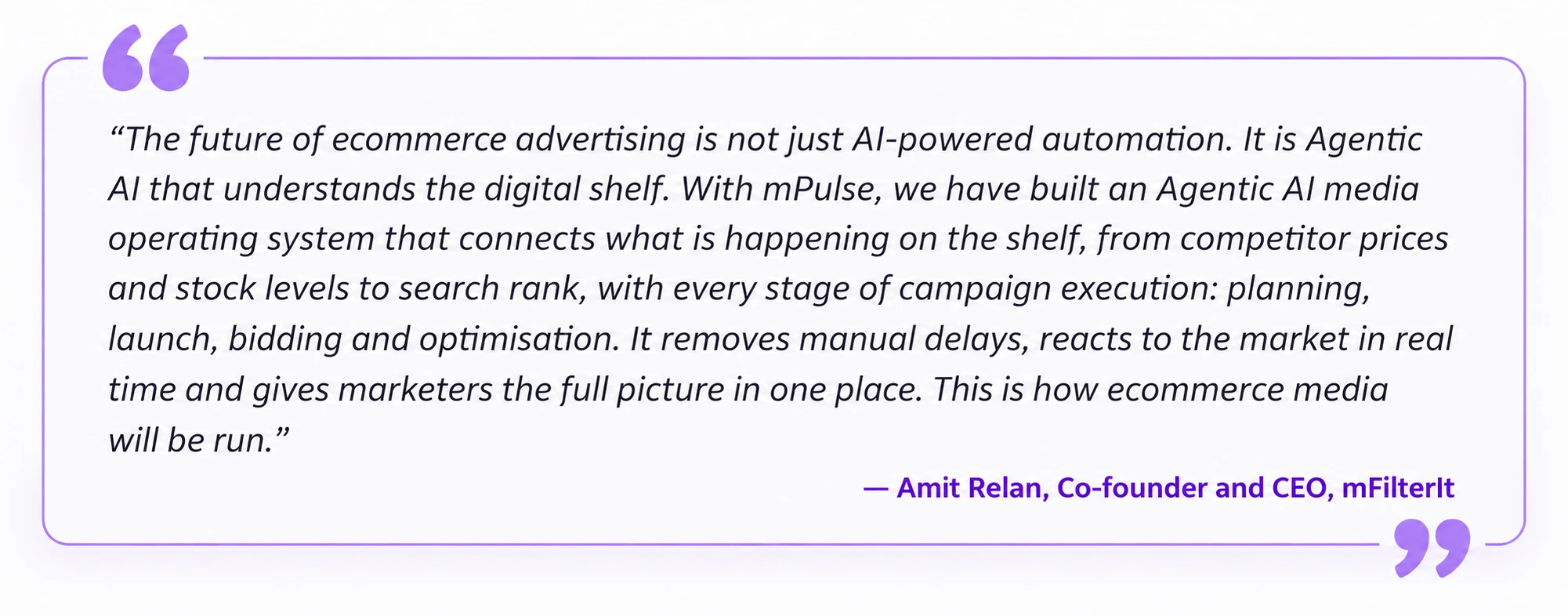
Therefore, this is the shift every ecommerce brand now needs to make: from tracking prices to understanding the full shelf, and from understanding the shelf to acting on it in real time.
Competitor pricing tells you where you stand. A holistic intelligence system tells you why, and what to do next.
See your prices the way your shoppers see them.
Book a demo with mFilterIt to bring competitor pricing, digital shelf intelligence, and media optimization into one system.
Frequently Asked Questions
What is competitor pricing?
Competitor pricing involves monitoring competitor prices, discounts, and special offers and using that information to price your products. In ecommerce, it has to be done on an ongoing basis because prices keep changing depending on where and when the purchases are made.
How often should ecommerce brands monitor competitor prices?
Mostly at least once a day for all categories, but more frequently in fast commerce, where prices can change several times a day. Real-time notifications regarding critical SKU help teams take action before any impact is made on conversions.
What is the difference between pricing intelligence and ecommerce intelligence?
Price intelligence deals with the prices, discount rates, and MAP policy adherence of the competitors. E-commerce intelligence covers the signals that determine whether a price sells or not, such as availability, search rankings, share of shelf, content, reviews, and performance.
How can competitor pricing data improve ad performance?
With media decisions taking cues from pricing and inventory data, brands will be able to boost their bids when they have an edge over their competitors in terms of pricing and have adequate stock. The ad dollars will thus go only towards campaigns for SKUs which will eventually sell.