
It’s that time of year again. Finance wants numbers. Leadership wants plans. And marketing teams across the country are doing what they do every time during financial year close: reviewing channel spends, comparing ROAS across platforms, and deciding where next year’s budget should go.
But here’s what most of those budget conversations skip.
Channel-level reporting tells you what you spent. It doesn’t tell you whether any of it actually worked the way you think it did.
The uncomfortable reality is that media waste doesn’t happen only in bad channel choices or poorly targeted campaigns. It happens at every stage of the funnel:
- Impressions served but never seen
- Clicks generated by bots or non-intent traffic
- Visits that never engage
- Conversions that were misattributed or would have happened organically

This means a vast majority of media advertising budget wastage, and ad fraud is invisible without deliberate, layer-by-layer auditing.
As you close the financial year and plan for FY 2026, the most important question is not just where to spend more, but where your budget may already be leaking.
The Full-Funnel Media Waste Audit Checklist
To ensure your next year’s budget is based on reliable performance data, marketers should audit campaigns across four key stages:
- Impressions (Reach & visibility)
- Clicks (Traffic quality)
- Visits/Installs (Real engagement)
- Events/Conversions (True business outcomes)
Below is a structured financial-year closing audit checklist for each stage.
Impressions & Reach Stage
You Paid for Reach. But Did Real People See It?
Impressions are hardest to tie to outcomes and often get ignored while auditing ad traffic. It is because an ad delivered is often considered to have been viewed. As per IAB viewability standards, if a static ad is visible on the screen for a continuous one second, the impression is counted as served.
However, delivered is not the same as seen. And seen is not the same as seen by the right person, in the right place, at the right moment. If you’re not actively auditing where your impressions are going, which placements, which audiences, which environments, you’re not running a branding campaign. You are just running a reach report.
What Advertising Budget Waste Looks Like At The Impression Stage
- Invalid Traffic (IVT): Bot-generated impressions consuming budget and reporting as delivered.
- Viewability failures: Ads technically served but never actually in-view by humans.
- Brand safety violations: Impressions delivered in unsafe or irrelevant content environments.
- Pixel stuffing: Multiple ads hidden within a single placement or tiny pixel, generating impressions that users never actually see.
- Ad stacking: Multiple ads layered on top of each other in a single placement, with only the top ad visible while all register impressions.
- Audience mismatch: Impressions served outside your target demographic, geography, or intent band.
- Frequency breaches: Ads repeatedly served to the same users beyond frequency caps; inflating impression counts without increasing incremental reach.
- Made-for-Advertising (MFA) sites: Low-quality publisher sites designed primarily togenerate ad impressions rather than genuine user engagement.
Know why brands need to go beyond viewability in details here.
Here’s what we saw in one of the campaign audits for a FMCG brand
A full-funnel audit conducted on an FMCG brand campaign running across placements over a four-week period, revealed something that the campaign dashboard simply wasn’t showing.

At first, the numbers looked fine. Impressions in the millions, a 1.43% CTR, and IVT at 3.4%. But the real signal was buried in the visit-to-click ratio: of every 100 clicks recorded, fewer than 48 resulted in an actual website visit.
More than half the clicks were going nowhere. Digging deeper into placement-level data made the picture significantly worse. Out of 4,859 total placements generating impressions, 92.98% of placements generated zero clicks further.
| Placement-Wise Breakdown | |
|---|---|
| Total Placements Active | 4,859 across the campaign |
| Placements with ZERO clicks | 4,518 placements — 92.98% of all placements |
| Impressions on zero-click placements | 2,55,808 impressions completely wasted |
| Good placements (11 only) | Delivered 1,25,15,646 impressions (1.69% CTR) |
| Placements with low VTC ratio | 169 placements with only 17.88% visit conversion |
Moreover, some of these were structurally incapable of generating visits, screensaver apps and set-top-box interfaces where a user has no ability to click through to a website.
What a programmatic campaign audit revealed for an energy sector brand
A near-identical pattern emerged in a programmatic campaign run by a global energy sector brand across two major programmatic advertising platforms. The brand was running audio and display campaigns to boost visibility and audience reach. Reach and engagement metrics were low, but nothing on either platform dashboard was flagging why.
After ad traffic analysis at the placement level across both platforms, here’s what the gap between the two platforms revealed.
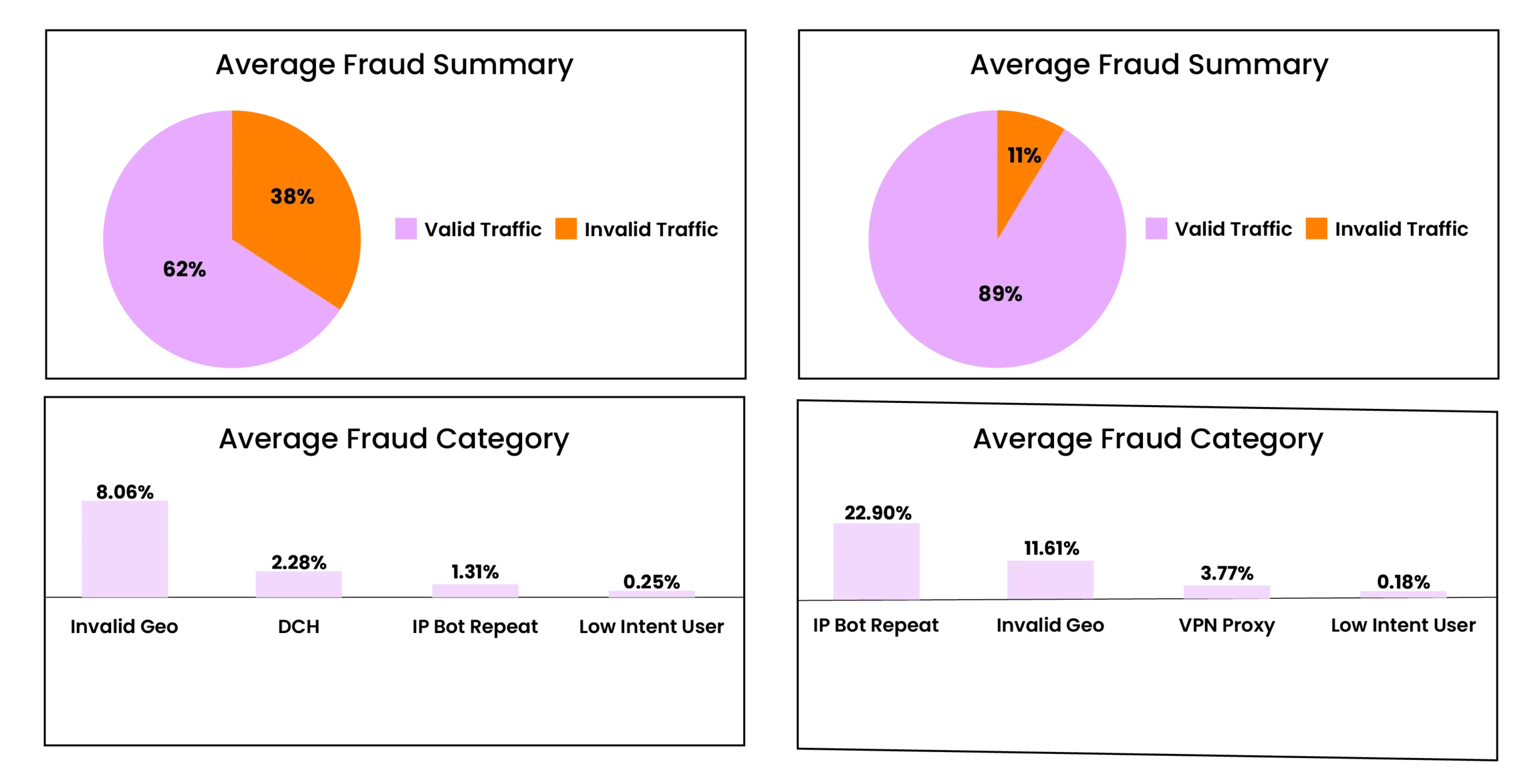
- On Platform A, 11% of all traffic was invalid, with invalid geo as the dominant ad fraud type at 8.06%, meaning a significant portion of clicks was being attributed to the wrong geographies entirely.
- On Platform B, 38% overall IVT, led by IP Bot Repeat at 22.90%. More than a third of all programmatic budget on that platform was generating zero genuine human engagement.
Furthermore, impression fraud didn’t stop at traffic quality. Brand safety violations compounded the financial waste with reputational risk.
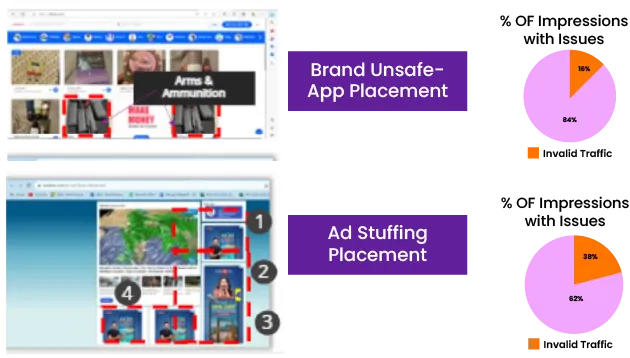
Ads were actively serving beside arms & ammunition content, generating 16% of impressions, and in a four-ad-stacked placement, absorbing 38% of impressions in a single cluttered slot where no user could meaningfully engage with any of the four ads. Neither violation was visible on the platform’s own reporting.

The audit trigger questions advertisers must ask before the financial year closes
| ✓ | Do you have a third-party verified viewability rate and attention metrics of each campaign, not just what the platform reports? |
| ✓ | What was your IVT % on programmatic inventory, and was it measured post-bid? |
| ✓ | Have you pulled a placement-level report showing click and visit performance by placement? |
| ✓ | Do you know which placements are structurally incapable of delivering website traffic? |
| ✓ | Were brand safety inclusion/exclusion lists active from campaign launch — not added mid-flight? |
Click Stage
Your CTR Looks Fine. But Who’s Actually Clicking?
Advertising budget wastage and ad fraud at this mid of the funnel stage is often a trap that most marketers still fall for.
Why? Because the performance numbers seem healthy on the surface. But when performance teams dig deeper into the actual leads, the phone numbers don’t connect. The form fills are junk leads. The app installs aren’t opening the app. The website visits are bouncing in under two seconds.
This is where click fraud hides. It doesn’t announce itself. It inflates your CTR, mimics real engagement, and by the time the damage shows up in your pipeline or ROAS, the budget is already gone. The click looked real, but the intent never existed.
What media budget waste looks like at the click stage
- Click fraud: Automated or incentivized clicks inflating CTR with no downstream intent.
- Invalid click sources: Traffic from data centres, VPNs, and blacklisted IPs counted as genuine engagement.
- Placement-level CTR anomalies: Unnaturally high or low CTRs that signal non-human behaviour.
- Geo fraud: Clicks attributed to untargeted geographies.
- Affiliate brand bidding: Partners bidding on your branded keywords, hijacking organic traffic you’d have gotten anyway.
- Click injection: Fraudulent clicks triggered just before an install or conversion to falsely claim attribution.
- Click spamming: Large volumes of random clicks generated to increase the chance of receiving credit for conversions.
Read more to know everything you MUST know about click fraud.
Here’s what we saw in a campaign audit for a FMCG brand
Going back to the same FMCG campaign audit, placement-level performance data revealed a pattern that CTR metrics were hiding entirely. When each placement was examined individually for click quality and visit conversion, here’s what the results presented.
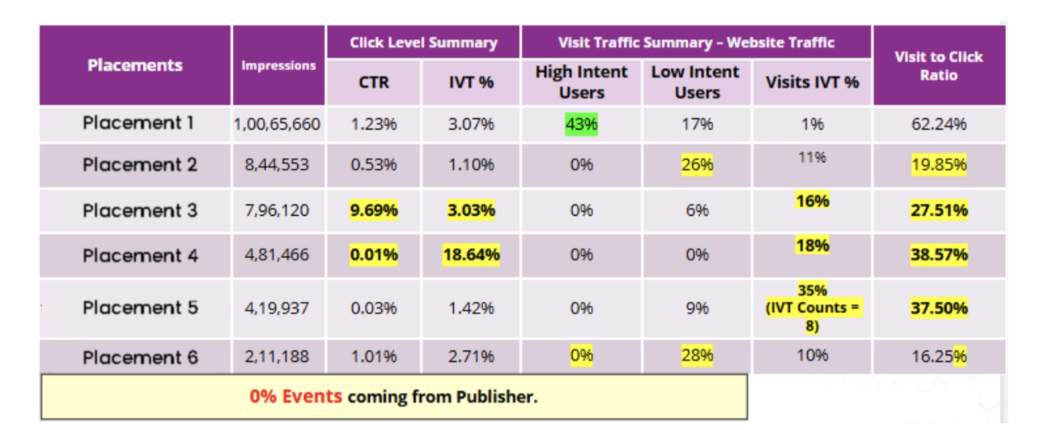
Two patterns emerge clearly from this data.
- A placement that showed a CTR nearly 7x the campaign average – a clear red flag for click inflation. More than 72% of clicks simply vanished between the ad and the website.
- A placement with near zero CTR showed an invalid traffic rate of 18.64%. The platform was serving ads to users with no purchase intent, in a context with significant non-human traffic.
This is also where the zero-events finding becomes critical. Across all placements in this campaign audit, the report noted 0% events coming from publishers. No in-page interactions, no engagement signals, no downstream behaviour whatsoever, even from placements that appeared to be delivering clicks.
For a brand campaign, this means the impressions and clicks were being paid for with no measurable brand interaction. The funnel was leaking at both ends simultaneously.
The audit trigger questions advertisers must ask before the financial year closes
| ✓ | Have you audited click sources at placement and IP level — not just at channel level? |
| ✓ | Do you track visit-to-click ratio by placement, or only overall campaign CTR? |
| ✓ | Which placements in your campaigns have CTRs that are statistical outliers, either too high or too low? |
| ✓ | Are your affiliate partners bidding on your branded keywords, and do you have visibility on this? |
| ✓ | What % of your clicks from top placements resulted in high-intent visits versus low-intent or zero-event visits? |
| ✓ | What % of clicks are identified as invalid clicks or click fraud? |
Visit & Install Stage
Users Clicked the Ad. But Did They Actually Engage?
The visit or install stage reveals whether the traffic generated by campaigns represents real human intent. In many campaigns, a large share of recorded clicks never becomes an actual website visit or app install, indicating low-quality or fraudulent traffic sources.
What advertising budget waste looks like at the visit/install stage
- Non-human visits: Website sessions generated by bots or automated scripts rather than genuine users, inflating traffic and engagement metrics.
- Lead fraud: Fake or low-quality leads generated through bots, incentivized traffic, or form manipulation to inflate conversion numbers.
- Click-to-Install Time (CTIT) anomalies: Installs completing in under 2-3 seconds of a click, a strong signal of click injection fraud.
- Install hijacking: Fraudsters generating fake installs using various tactics to claim attribution without a real intent download.
Want to know more about types of ad fraud? Click here.
Key Observations: What An App Campaign Audit For Ecommerce Platform In India Revealed
A leading e-commerce platform running large-scale digital campaigns to drive traffic and installs began noticing a mismatch between high ad delivery numbers and actual user engagement.
Campaign reports showed strong impression and click volumes, but conversion quality and install performance were not improving at the same pace. A full-funnel traffic audit was conducted to understand where the leakage was happening. Here’s what the data revealed.
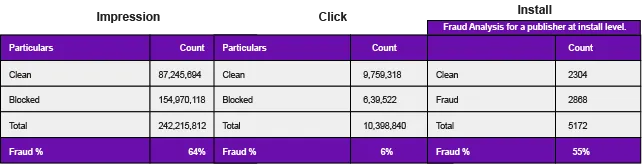
Analysis revealed that multiple fraud patterns were affecting campaign performance, including click spamming, fake attribution, and abnormal install behaviour.
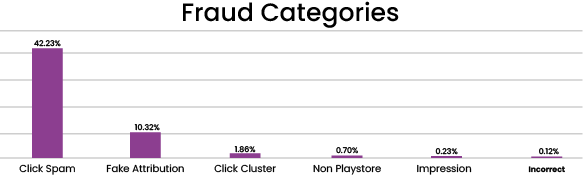
However, with mFilterIt’s ad traffic validation solution, once fraudulent impressions were blocked at the top of the funnel, the quality of traffic improved significantly. CTR increased from 4% to 11%, a 2.75× improvement, showing that removing invalid traffic allowed genuine users to engage with the ads.
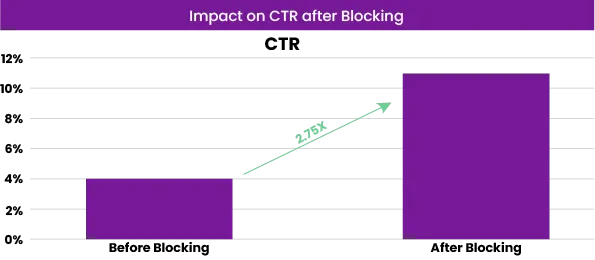
The audit also revealed an important pattern: fraud was present at every stage of the funnel. Blocking it only at the impression level was not enough; continuous monitoring across impressions, clicks, and installs was required to fully protect campaign performance.
The audit trigger questions advertisers must ask before the financial year closes
| ✓ | What is your visit-to-click ratio by placement and traffic source? |
| ✓ | Are there placements where clicks are recorded but visits never occur? |
| ✓ | Which traffic sources produce high bounce rates or extremely short session durations? |
| ✓ | For app campaigns, what is the Click-to-Install Time (CTIT) distribution by partner? |
| ✓ | Are installs occurring too quickly (within seconds) after a click, indicating click injection fraud? |
| ✓ | Are certain publishers generating installs but no meaningful in-app engagement afterward? |
Conversions & Attribution Stage
Your ROAS Looks Healthy. But Is It Measuring the Right Thing?
Most campaign audits stop at the click stage. And this is where conversions, installs, and attribution manipulate everything you believe to be true in your data.
At this stage, the numbers don’t just reflect campaign performance. They drive every future budget decision. When conversion data is inflated or misattributed, you don’t just misread the past. You actively fund the wrong things going forward.
What advertising budget waste looks like at the event, conversion, and attribution stage
- Pixel/tag misfires: Tracking firing on non-conversion events such as page views or micro-interactions, inflating reported conversions.
- Attribution inflation: Multiple channels claiming the same conversion, inflating reported ROAS across the board.
- Affiliate conversion hijacking: Affiliate partners intercepting organic or direct traffic to claim credit for conversions.
- Post-install event fraud: Fraudulent installs reporting fake in-app events to pass quality filters and avoid detection.
- Platform vs. actual revenue gap: Platform-reported ROAS and blended marketing efficiency ratio from finance data tell very different stories.
To learn more about what the full-funnel ad fraud detection looks like. Read here.
What we saw in a retargeting-level campaign audit for a major Q-commerce platform in India
A major q-commerce platform was running a retargeting campaign to drive re-engagement and increase in in-app activity among existing users.
However, three challenges were surfacing simultaneously: low user engagement despite spend on re-engagement campaigns, organic and acquisition traffic being poached, and higher publisher pay-outs even with low conversions.
mFilterIt began granular-level analysis:
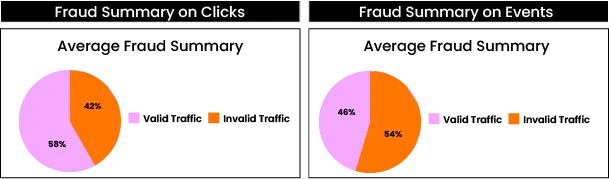
At click level, random clicks were being fired in the background to capture organic traffic before genuine user intent could be attributed correctly. The platform was paying for re-engagement; it was already earning organically.
At events level, engagement partners weren’t waiting for users to become inactive before triggering re-engagement clicks. They were firing clicks on users who had already installed the app and were actively using it, claiming attribution credit for organic behaviour that needed no paid intervention.
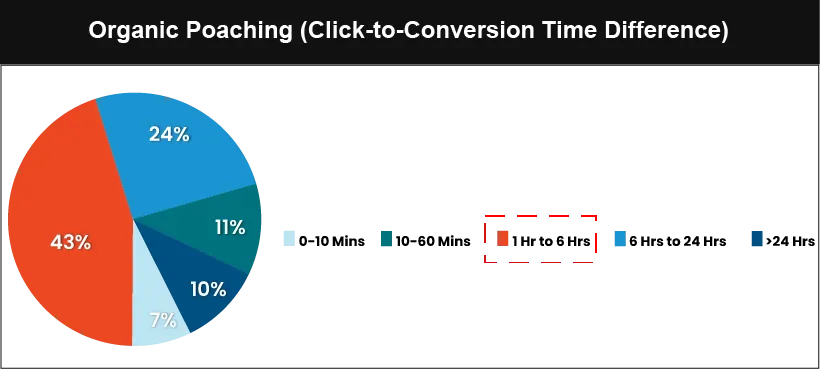
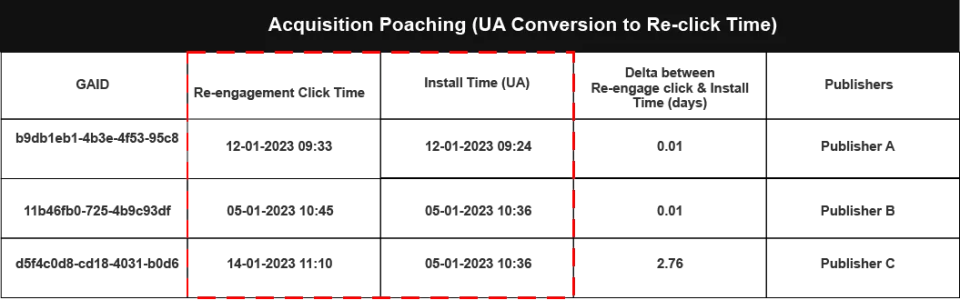
For Publisher A, the click-to-conversion time difference on 11th January was 35%, and the conversion happened after 6 hours of the click, a clear signal of organic traffic hijacking through random background clicks. Publisher C showed a delta of 2.76 days between re-engagement click time and install time, meaning the re-engagement partner was claiming credit for a user who had installed the app nearly three days before the re-engagement click even fired.
What ad traffic validation tool – Valid8 flagged and actioned:
- Identified affiliates firing random clicks to poach organic conversions
- Detected acquisition poaching where re-engagement partners claimed credit for already-active users
- Removed pay-outs to fraudulent affiliates based on granular click and event-level evidence

The audit trigger questions advertisers must ask before the financial year closes
| ✓ | Does platform-reported ROAS match finance-verified revenue data? |
| ✓ | When was the last time you conducted an independent audit of pixel and tag configurations? |
| ✓ | Have you tested incrementality or geo-holdout experiments during the year? |
| ✓ | What are the Day-7 and Day-30 retention or event rates by partner? |
| ✓ | Are certain publishers generating installs without downstream events or purchases? |
| ✓ | Are affiliate partners intercepting organic traffic and claiming conversion credit? |
| ✓ | Are event-to-install ratios consistent across acquisition partners? |
| ✓ | Do you have visibility into which specific events: registrations, add-to-carts, purchases are being faked versus genuinely triggered by real users? |
Why a Full-Funnel Audit Matters Before FY Budget Reset
Most marketers invest in tools that measure performance. Fewer invest in tools that validate whether that performance is real. That gap is exactly where the budget disappears year after year, because the measurement infrastructure never catches what the ad fraud infrastructure is doing.
As you plan your FY tech stack for 2026, the question isn’t just which channels deserve more budget. It’s about whether you have a solution that protects the media budget at every stage of the funnel, not just the stage that’s easiest to report on?
Why Ad Traffic Validation Solution by mFilterIt?
Valid8 by mFilterIt is built for exactly this: full-funnel ad fraud prevention and traffic validation across branding, web performance, and app campaigns, running continuously so the audit isn’t a year-end exercise. It’s an ongoing standard.
Here’s what it delivers at each stage:
| At the top of the funnel (Impressions & Reach) | At the mid funnel (Clicks & Traffic Quality) | At the lower funnel (Conversions & Attribution) |
|---|---|---|
| 1. Validates incoming ad traffic from every source in real time, filtering out bot-generated and invalid impressions before they consume budget. | 1. Detects and blocks click fraud, click injection, click flooding, & other sophisticated ad fraud patterns using AI and ML-based behavioral analysis across 60+ parameters. | 1. Provides log-level data on every conversion event, so you can validate which sources are driving real outcomes versus reporting inflated numbers. |
| 2. Monitors ad placements across programmatic inventory, video platforms, Google, Meta, etc to flag brand-unsafe environments proactively. | 2. Identifies geo fraud and traffic originating from blacklisted IPs, data centres, and VPN sources — sources that look like clicks but carry no intent. | 2. Detects post-install event fraud for app campaigns, going significantly beyond what standard MMPs are configured to catch. |
| 3. Ensures your reach metrics reflect genuine human audiences, so brand decisions are made on real data rather than inflated delivery numbers. | 3. Flags affiliate brand bidding violations in real time, so you’re not paying for traffic that was already coming to you organically. | 3. Tracks CTIT anomalies and install clustering patterns that signal fraudulent attribution. |
Moreover, our ad fraud detection solution combines AI and ML algorithms with human expert oversight, ensuring that sophisticated fraud patterns that evade automated detection are still identified and prevented from entering the funnel – from the first impression to the final conversion.
Conclusion
Every stage of this checklist revealed the same pattern: waste that was invisible until someone looked for it. Waste that isn’t identified at the financial year close doesn’t disappear when budgets reset. It gets refinanced. Next year’s plan funds this year’s mistakes at next year’s prices.

So, don’t carry last year’s waste into next year’s budget. Run a full-funnel audit with mFilterIt before your FY closes. Invest in the right solutions now to bag better outcomes tomorrow.
Get in touch with our experts to learn more.
Quick Full-Funnel Media Audit Framework
| Funnel Layer | Objective | Risk if Not Audited |
|---|---|---|
| Impressions | Validate real reach | Bot impressions, MFA inventory |
| Clicks | Validate traffic intent | Click fraud, VPN traffic |
| Visits / Installs | Validate engagement | Disappearing clicks, fake installs |
| Events / Conversions | Validate business outcomes | Attribution fraud, fake leads |