
Affiliate programs are a powerful revenue driver and bring undeniable scale and performance to the table. It’s no surprise that brands continue to increase their investment in the channel. Global affiliate marketing spend is expected to reach $17B in 2025 (up from $15.7B in 2024) and is projected to surge to $38.35B by 2030. (Source)
But as investments rise, one question remains: how deeply is this performance really being evaluated? Nearly 22–30% of digital ad spend (Source) is lost to invalid traffic or fraudulent activity and affiliate campaigns are one of the easiest places for it to hide. The affiliate ecosystem is revenue-driven but complex with multiple partners involved and that makes it more vulnerable to performance leakages.
When some partners take credit for users you already acquired organically, you unknowingly start competing with your own growth. You know your external competitors. What you don’t see is the partner within your own ecosystem quietly draining your ad budget. These bad partners not only impact you but also steal the credit of genuine partners, impeding their growth.
Sounds like a big claim? Let’s uncover it.
Steady Growth or Midnight Spikes? What Affiliate Data Is Telling You
Your genuine affiliate partners will show a steady and explainable growth pattern. The installs and traffic driven by them will not be restricted to a specific time window or sudden spikes. Instead, you will see natural variations; some days higher, some lower based on seasonality, campaign activity, and normal user behaviour, making the performance look realistic and trustworthy.
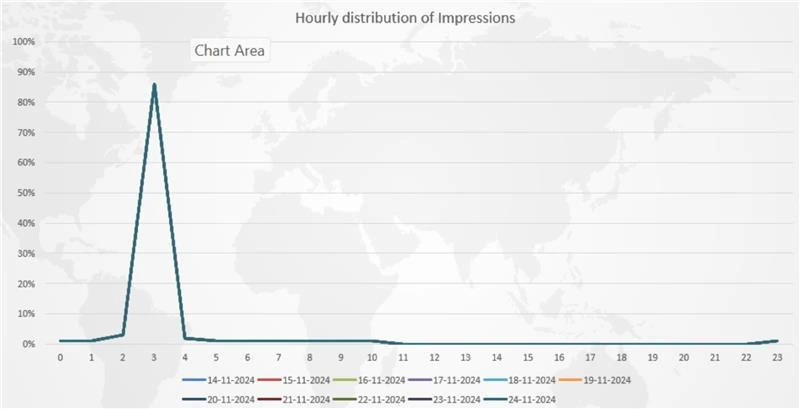
Whereas, in case of fraudulent affiliates, you will notice a sudden spike in the number of installs. The user journey will not be mapped, and apps can get installed on always-on basis especially during the times when no normal person will install your app (3-4 am).
From a marketer’s perspective, sudden out performance without clear explanation often signals inflated or manipulated metrics, not real user acquisition.
The graph below shows the exact odd-hours spike happening at peak night where y-axis highlights the install rate and x-axis, the time in hours.
How is Wrong Affiliate Intervention Rewriting your Growth Story?
You built a strong affiliate network but what if it is rewriting your growth story? Affiliates that do not bring valid traffic and yet win the attribution race are actually not contributing to your ROI. Here’s what the wrong affiliate intervention looks like –
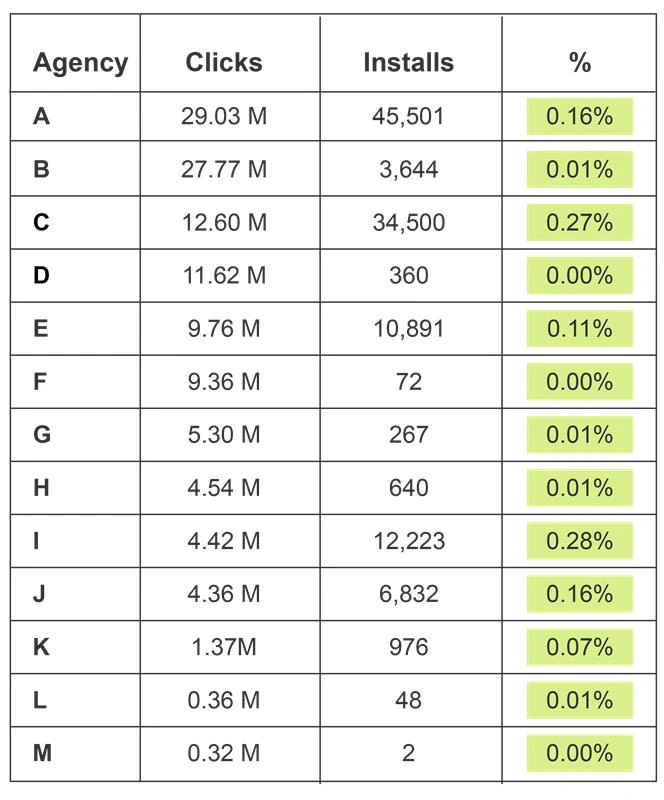
This data of 7 days indicates campaign performance of various affiliates.
In just seven days of campaign data, the gap between clicks and installs shows major discrepancies. One partner alone generated 29.03 million clicks but delivered only 45,501 installs, an extremely low 0.16% click-to-install rate while others also failed to cross even the 1% install rate mark. On the surface, the program appears to be scaling through massive traffic, but in reality, the growth narrative is being shaped by inflated clicks rather than real users, distorting performance, budgets, and optimization decisions.
From Attributed Performance to Real Incrementality: The Shift You Need
This time, you are not required to increase the budget of affiliate programs, instead what you require is a comprehensive approach that provides right attribution to deserving partners, cutting noise of fraudulent affiliates. Here’s how mFilterit’s holistic ad fraud solution Valid8, empowers your brands with an added layer of attribution integrity –
- Eliminate odd-hour install spikes by closely monitoring the full user journey and identifying suspicious patterns at the source level before they drain your budget.
- Demand true source-level transparency to shift budgets toward partners delivering genuine installs and cut spend on hidden, low-quality traffic sources.
- Detect traffic quality issues and behavioural anomalies early to optimise campaigns toward high-intent users instead of inflated performance numbers.
- Automate blocking, protect payouts, and optimise partner performance to reduce wasted spend, safeguard ROI, and scale confidently with partners that truly drive results.
How We Tracked Down IVT: Saved $1.3 Million in Just 3 Months ?
For a major travel portal running performance campaigns to acquire new customers, the problem wasn’t the budget, it was the lack of visibility into where the traffic was actually coming from. Despite healthy spending, the brand could not clearly distinguish between genuine and low-quality affiliate sources.
We stepped in and closely monitored affiliate performance across the program. By identifying the partners driving fraudulent and non-incremental activity and stopping payouts to them, the brand ensured that only genuine contributions were rewarded.
As a result, it was able to save up to $1.3 million in just three months while bringing back control over its performance spend.
Conclusion
The last thing you must worry about while running an affiliate program is to fight against your own affiliates. Affiliate marketing program are not the problem; the real opportunity lies in making them work the way they are meant to. To unlock their true incremental value and eliminate dishonest contributions, brands need to evaluate the entire affiliate journey, not just the final attribution. Only then they can fight affiliate marketing fraud and reward genuine partners, stop performance leakages, and turn the channel into a reliable, growth-driving engine.
Want to know how? Schedule a call!
FAQs
How Can You Tell If An Affiliate Is Driving Real Growth?
Real affiliates show consistent, natural performance trends. Sudden install spikes, odd-hour conversions, or a big gap between clicks and installs are signs of non-incremental or low-quality traffic.
Why Do Affiliate Programs Sometimes Waste Ad Budget?
Because last-click attribution can reward partners who didn’t create real user intent, brands end up paying for users they would have acquired organically, leading to inflated metrics and lower ROI.
How Can Brands Stop Affiliate Fraud And Protect Roi?
By analysing the full user journey, identifying traffic sources, and rewarding only genuine incremental conversions while blocking invalid partners and payouts.
What are the signs of affiliate fraud in campaign data?
Common signs include sudden traffic spikes, odd-hour conversions, unusually high clicks with very low installs, poor click-to-install rates, and conversions from suspicious referral sources. These patterns often indicate invalid traffic or attribution of manipulation.
How can brands audit their affiliate partners effectively?
Brands can evaluate affiliate partners by reviewing traffic quality, conversion behaviour, referral sources, and adherence to program guidelines. Ongoing performance assessments and partner-level visibility help identify suspicious activity, policy violations, and low-value traffic sources.
How can real-time monitoring help prevent affiliate fraud?
Real-time monitoring helps uncover suspicious patterns as they happen, enabling immediate corrective action. This minimizes invalid payouts, safeguards marketing budgets, and ensures commissions are attributed only to genuine partner-driven conversions.