
AI is no longer just accelerating digital advertising; it’s powering a new generation of bot-driven fraud.
As AI adoption surges, growing from USD 8.6 billion market in 2023 to a projected USD 81.6 billion by 2033, it has unlocked unprecedented speed and scale. But this same power is now being exploited to generate massive volumes of intelligent bot traffic that looks, behaves, and performs like real users.
These AI-driven bots don’t raise obvious red flags. They blend into campaigns. AI has made click fraud faster, smarter, and harder to detect. And the only way to fight it is with AI itself.
This blog will uncover –
- How AI becomes a fraud enabler?
- What are the impacts of AI-driven fraud on ad performance
- Signs to Identify Advanced AI-Driven Click Fraud
- How AI shields brands against advanced fraud tactics
How AI Becomes a Fraud Enabler
Earlier, fraudulent activity was easier to spot repetitive patterns, obvious spikes, or low-quality traffic that clearly looked non-human. Today, AI has changed the game click fraud has evolved with sophisticated tactics like click spamming and click injection. Fraudsters now use intelligent bots that analyse campaign behaviour, mimic real user journeys, and continuously adapt to evade detection. The result is an illusion of performance.
The most damaging outcomes of AI-driven click fraud include:
Bot-Driven Automated Clicks
AI-powered bots now simulate real human browsing behavior, mimicking scrolling, dwell time, and natural click patterns to quietly manipulate engagement metrics and drain ad budgets without raising suspicion.
Emulator and Device Farm Traffic
Fraudsters deploy emulators and device farms, using AI to manage thousands of virtual devices that generate fake clicks, installs, and events. To ad platforms, this traffic looks legitimate, diverse devices, consistent behavior, and clean signals.
Ad Stacking and Hidden Ads
AI also enables ad stacking and hidden ad techniques, where multiple ads are layered or concealed behind visible elements. Impressions and clicks are generated without any real user intent
Geo and IP Rotation
To further evade detection, AI-driven systems continuously rotate IP addresses, geographies, and device identities, making fraudulent traffic appear like it’scoming from genuine users across multiple regions.
Know how click fraud impacts performance campaigns in walled gardens
What is the Impact of AI–Driven Bots on Ad Performance?
As the evolution of AI is expanding its feet across the digital ecosystem, its real-world impacts on ad performance are clearly visible. Here’s how they function –
- Because these bots adapt to platform rules, they often bypass basic fraud checks and continue running undetected.
- By copying real user behavior, bot clicks look genuine, making fraud hard to spot.
- Fake clicks and engagement corrupt performance data, so reports no longer reflect reality.
- This misleads bidding, targeting, and optimization algorithms, pushing spend toward fraudulent traffic.
- Over time, ROI, attribution, and conversion metrics get distorted, hiding real performance issues.
- Worst of all, this activity can look clean in dashboards, while quietly eroding returns across paid media campaigns.
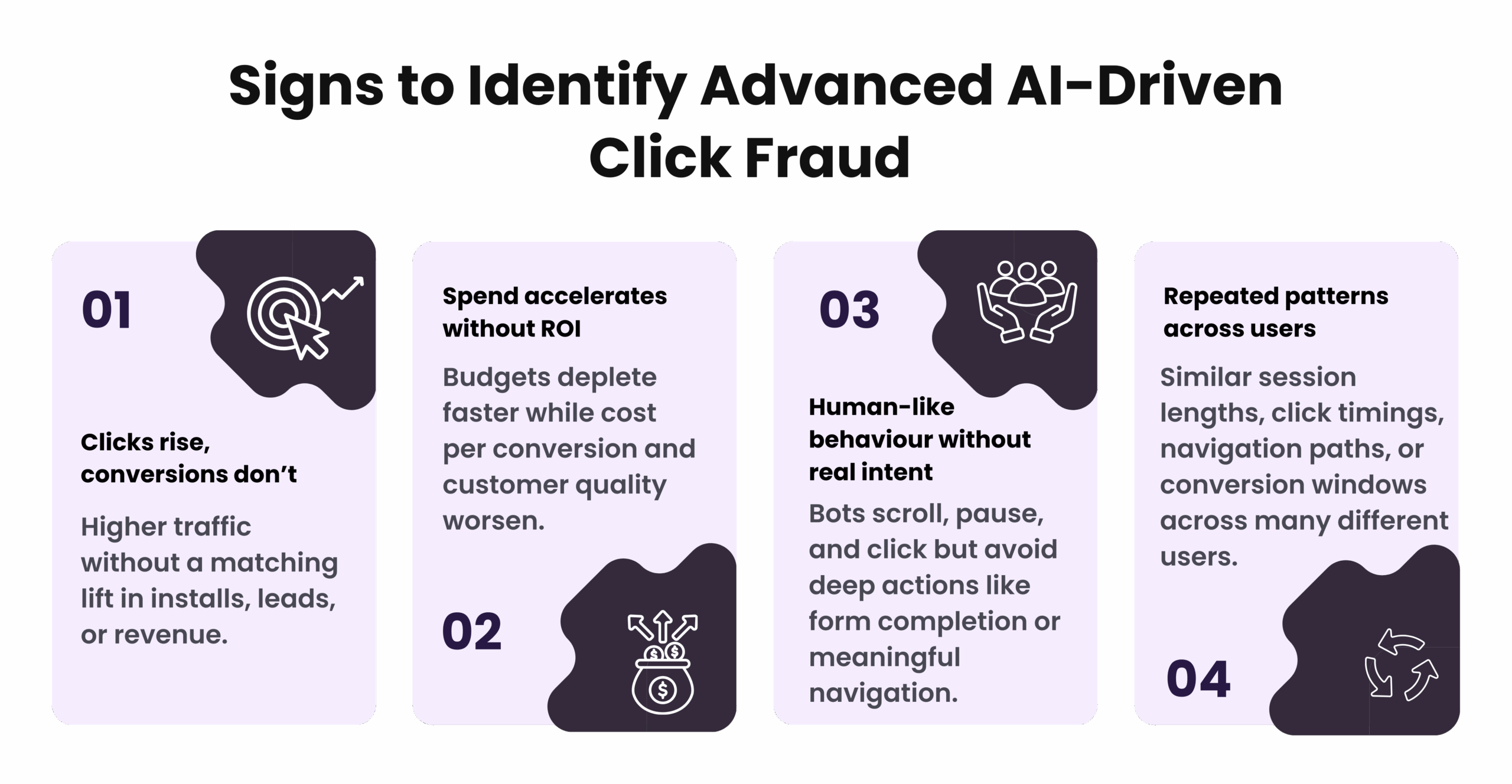
AI as the Defense Layer: Role of AI Against Click Fraud
AI-driven fraud prevention systems track unusual user behavior and uses past data to predict fraud, helping advertisers stay ahead of scammers causing click injection. Here’s how AI-powered ad fraud detection solution like Valid8 empower brands against click fraud –
Detecting Click Repetition and Abnormal Behaviour Patterns
AI keeps an eye on clicks across devices, IP addresses, and sessions to spot unusual patterns—like repeated clicks, sudden spikes, or traffic coming from suspicious IPs, proxies, or VPNs. By identifying these signs of bot activity in real time, AI can block fraudulent clicks before they waste your budget or give you misleading performance data.
Filtering Invalid Devices Through User-Agent Analysis
Fraudulent traffic often reveals itself through abnormal or manipulated user-agent strings. AI examines device, OS, and browser combinations to detect inconsistencies that don’t align with real-world usage patterns. Invalid or spoofed devices are flagged before their clicks are counted as genuine engagement.
Know what to look for in a click fraud detection tool
Validating Geographic Authenticity Through IP Intelligence
AI verifies whether traffic is coming from applicable and relevant geographies. Mismatches between campaign targeting, and user behaviour often indicate fraud. By performing geo-validation in real time, AI ensures only legitimate, location-relevant clicks influence campaign performance metrics.
Detecting MFA Sites Using Impression/Click-Level Intelligence
Made-for-Advertising (MFA) sites are designed to generate ad revenue rather than real engagement. AI analyses impression and click level data coming from low-quality users of these sites, captured via tracking pixels and runs it through fraud detection algorithms and blacklists. Once identified, these MFA sources are automatically blocked within ad managers, preventing further spend leakage in real time.
Enabling True Source-Level Transparency
AI-driven defence systems provide granular visibility into traffic sources, revealing exactly where clicks originate. This source-level transparency helps marketers distinguish high-quality inventory from fraudulent or low-value placements, allowing smarter optimisation decisions and greater control over media spend.
Conclusion
The real challenge for marketers isn’t whether to adopt AI, it’s how to use it responsibly and defensively. As AI-driven bots become increasingly human-like and adaptive, traditional fraud controls are no longer enough. Invalid traffic blends seamlessly into campaigns, and performance metrics alone can no longer be taken at face value.
The solution is clear: AI must fight AI. With mFilterIt’s AI/ML powered click fraud prevention tool, Valid8, brands can protect their campaigns, safeguard budgets, and boost ROI without compromising trust or data quality.