
Ramadan reshapes daily life in the MENA region, and quick commerce brands feel the impact instantly.
It is a period of cultural reset – daily routines change, eating schedules shift, social gatherings become more frequent than usual, and everyone plans their days around Iftar and late-night meals. This further changes how people shop, especially on ecommerce platforms. They expect deliveries in minutes, not hours or days.
But speed is not the only thing that matters at this time. During Ramadan, quick commerce platforms become a necessity. Consumers rely on these platforms to solve real, time-sensitive problems such as a forgotten ingredient just before Iftar, get-together needs at home, or a last-minute need that cannot wait until the next day.
In these moments, shoppers mostly buy the first product they see. This is where the pressure of being visible and available at the right time starts to build.
The demand is high, and the margin for error is very low. So, the real question is – how do you ensure that your brands bags in those last-minute sales?
This is where winning or losing the Ramadan sales opportunity actually happens — on the digital shelf, in real time.
And that’s exactly what this guide is about:
How Ramadan reshapes quick commerce shopping behaviour
Operational challenges for brands across pricing, availability, visibility, and shelf performance
What it truly takes to win on the digital shelf
A practical Ramadan-to-Eid execution roadmap
How mFilterIt’s ecommerce analytics tool enables real-time monitoring and action
A case study on improving platform presence for a global F&B brand in MENA
Consumer Behaviour Trends During Ramadan for Brands in MENA
Success during Ramadan is more about how shoppers experience your digital shelf in moments of urgency. Therefore, it is important for quick commerce brands to understand these behavioral shifts to stay visible on the digital shelf.
1. Many shoppers install and engage with apps before Ramadan begins
App install and engagement data consistently show a lift in acquisition activity in the weeks leading up to Ramadan as consumers prepare for the month; these pre-season cohorts often convert to higher LTV than users acquired mid-Ramadan. That makes early, targeted user acquisition and retention work a high-leverage play.
2. Consumers shop in short, high-intent bursts
During Ramadan, consumers don’t open apps to browse endlessly and discover new brands. They come with a clear purpose and specific immediate needs. These shopping sessions are short, decisive, and highly concentrated around certain hours of the day. Post-iftar and late-night windows see sharp spikes in traffic, but they also come with heightened expectations.
Shoppers want to find what they need quickly and confirm availability instantly. Any delay in discovery or confusion on the product page increases the likelihood of abandonment.
For quick commerce brands, this means the digital shelf must perform at its best during these narrow windows. Visibility during off-peak hours matters far less than being present and easy to choose when intent is highest.
3. Already familiar brands feel safer
During Ramadan or mid-Ramadan, shoppers are generally less inclined to experiment with new brands or unfamiliar products, especially when purchasing food, beverages, or essentials tied to family meals and hosting. On quick commerce platforms, this translates into a stronger pull toward brands that shoppers already recognize and trust.
Listings that feel unfamiliar, poorly presented, or inconsistent are more likely to be skipped, even if the price is attractive. This means ecommerce brands need to pay extra attention to maintaining a strong, consistent presence on the digital shelf
4. Trust signals matter to drive conversions
Industry studies show delivery performance and up-to-date reviews strongly influence purchase intent. In the Ramadan context, a product that appears slightly more expensive but clearly available, well-rated, and deliverable within the required timeframe often wins over a cheaper option that feels uncertain, because shoppers optimize for certainty. Brands should surface these signals prominently on the product card. They act as shortcuts in decision-making, helping consumers choose quickly without second-guessing.
5. Late-night shopping windows take the lead
Ramadan turns nights into the busiest commerce window. Multiple regional analyses show a spike in app sessions and orders after iftar and through the late night (roughly 8 pm – 3 am), with particularly sharp activity around the hour after iftar and the pre-suhoor window. If your dark-store coverage or push-timing isn’t aligned to these hours, you risk missing the moment.
6. Category mix shifts – groceries, gifting and wellness surge
Quick commerce demands extend beyond groceries during this time. While essentials like food ingredients and beverages continue to drive volume, there is a noticeable rise in gifting, wellness, and hosting-related purchases.
Consumers look for convenient solutions such as curated iftar bundles, premium food items, desserts, dates, beverages, and personal care or wellness products linked to self-care routines during the month. This shift also fuels impulse buying, especially when bundles or ready-to-order packs are easily discoverable on the platform.
For quick commerce brands, this means assortment planning cannot focus on staples alone. Pairing high-frequency essentials with gifting-friendly and occasion-led SKUs helps capture incremental demand that peaks throughout Ramadan, not just at mealtimes.
Operational Challenges Quick Commerce Brands Face During Ramadan
As demand compresses into narrow windows and consumer expectations rise, even small operational gaps surface quickly. Here are some of the operational challenges quick commerce brands face to stay relevant on the digital shelf during peak times like Ramadan:
Products go out of stock in specific locations during peak demand periods
Availability is the most critical element of quick commerce performance during Ramadan or any high-demand period.
1. Location-level out of stock issues during peak windows
Products may be available centrally, but go out of stock at specific dark stores or delivery zones just before iftar or late at night.
2. Delayed visibility into stock gaps
Teams often discover availability issues only after sales decline, leaving no time to recover lost demand.
3. Lost sales due to competitors
When primary SKUs are unavailable, shoppers immediately switch to substitutes or competing brands, often permanently losing the order.
In Ramadan, even brief availability gaps can result in disproportionate revenue loss because demand windows are short. Implementing proactive stock availability tracking in quick commerce ensures brands can detect location-level gaps early and prevent revenue loss during high-intent shopping windows.
Limited product visibility and discoverability during peak Ramadan shopping hours
High demand during Ramadan intensifies competition for visibility across search and category listings.
1. Sudden drops in search and category rankings
Products that perform well on one day may lose visibility the next due to platform algorithms, competitor promotions, or availability issues.
2. Increased keyword and category competition
Ramadan attracts new brands, festive bundles, and private labels, pushing established SKUs further down the shelf. Moreover, inconsistent content can hurt search relevance, making it harder for high-intent shoppers to discover products quickly.
3. Lack of clarity on why visibility changes
Without real-time insights, teams are often unable to identify whether drops are caused by pricing, availability, content, or competitive activity.
If a product is not visible during peak Ramadan hours, it effectively does not exist for the shopper.
Prices change quickly making it hard to stay competitive without losing margins
Pricing in quick commerce is highly dynamic, platform-driven, and sensitive to competitor moves.
1. Reactive discounting during peak hours
Brands often respond to competitor price drops without full context, leading to unnecessary margin erosion during already high-volume periods.
2. Price inconsistencies across platforms
The same SKU may appear at different price points on different quick commerce apps, creating confusion and weakening brand trust.
3. Limited visibility into competitor pricing
Without real-time benchmarking, brands struggle to understand whether price changes are strategic or simply reactive, making it harder to maintain control duringongoing campaigns.
During Ramadan, pricing mistakes compound quickly because shoppers make decisions in seconds and rarely revisit a product once they move on. Real-time price optimization for Q-commerce becomes critical, as brands need instant visibility into competitor price movements to stay competitive without sacrificing margins.
Digital shelf optimization, product listing, and category challenges affect conversion & trust
Beyond pricing, availability, and visibility, the overall health of the digital shelf plays a decisive role in conversion.
1. Inconsistent or weak product presentation
Incomplete content or product details, low-quality images, or outdated listings reduce shopper confidence.
2. Delivery promise and buyability issues
Slower delivery times or unclear TAT badges can make products less attractive, even when they are in stock.
3. Disconnect between media activity and shelf performance
Traffic driven through campaigns does not always translate into better digital shelf visibility or conversions, resulting in inefficient spend.
During Ramadan, shoppers rely heavily on visual cues, trust signals, and delivery assurance to make fast decisions, making digital shelf optimization non-negotiable.
What we also need to understand here is that these challenges exist throughout the year, but Ramadan magnifies their impact. Decisions are made in minutes, not days; tolerance for friction drops, and competition intensifies. Therefore, for quick commerce brands, success depends not on solving these issues individually, but on managing them together, consistently and in real time.

Be on top of the Digital Shelf: A Practical Ramadan Execution Timeline for Quick Commerce Brands
As the time comes closer and Ramadan is about to begin, here are some practical execution tips for quick commerce brands operating under tight timelines to win on the digital shelf. It focuses on what to do now, what to watch daily during Ramadan, and how to capitalize on Eid and post-Ramadan behaviour.
1. Right Before Ramadan Begins (Last 3–4 Days)

In the days leading up to Ramadan, the goal is not to redesign strategy but to remove friction. This is the last opportunity to ensure your digital shelf will hold up under pressure.
What to prioritize:
Finalize hero SKUs and Ramadan-relevant assortments (iftar essentials, beverages, dates, quick meals, gifting items).
Check availability across locations and dark stores, not just at a platform level.
Validate pricing consistency across quick commerce platforms to avoid confusion during early demand spikes.
Ensure product listings are clean, complete, and easy to choose at a glance.
Activate real-time monitoring and alerts with advanced ecommerce analytics solutions for availability drops, rank changes, and pricing anomalies.
Key question to ask now:
If demand spikes tonight, would we know immediately if something breaks on the digital shelf?
2. During Ramadan (Daily & Weekly Focus)

Once Ramadan begins, execution shifts from preparation to real-time control. Consumer behaviour stabilizes into predictable peaks, but the digital shelf remains volatile.
What to monitor daily:
In-stock rates during post-iftar and late-night windows.
Search and category visibility for hero SKUs.
Competitor pricing, new listings, and substitute products appearing on the shelf.
What to review weekly:
Rank stability of top-performing SKUs.
Locations or platforms where availability issues repeat.
Promotions or media activity that did and didn’t translate into digital shelf visibility or conversions to allocate budgets in the right direction.
Execution mindset:
Speed of response matters. The brands that win are the ones that fix issues within hours, not days.
3. Eid Phase (Last Week of Ramadan + Eid Days)

As Ramadan draws to a close, shopping intent begins to change. Demand moves from daily essentials to Eid-specific needs and gifting.
What changes:
Increased demand for premium items, sweets, desserts, beverages, and gifting packs.
Shorter buying windows with higher emotional intent.
Stronger competition for visibility as brands push Eid offers.
What to focus on:
Ensure Eid-relevant SKUs are highly visible and available across platforms.
Monitor delivery TAT closely, as delays during this phase directly impact trust.
Track competitor activity aggressively using ecommerce intelligence solution; Eid is often where aggressive promotions appear.
Key question to ask:
Are our most relevant Eid products the easiest ones to find right now?
4. Post-Ramadan (What to do with the post campaign metrics)

Once Eid passes, demand patterns begin to normalize, but this period is critical for learning.
What to analyze:
Which SKUs lost sales due to availability, visibility, or out of stock gaps?
Where price or promotion decisions led to margin erosion without conversion uplift?
Which locations or platforms consistently underperformed?
How digital shelf performance varied between early, mid, and late Ramadan?
What to lock in:
Peak-hour benchmarks for future festivals and sale events.
SKU-level performance learnings to inform next seasonal planning.
Improvements to monitoring, alerts, and execution playbooks.
Why this matters?
The brands that treat Ramadan as a learning cycle, not just a sales period, are better prepared for the next demand spike, whether it’s a sale, a weekend surge, or another festive season.
How mFilterIt’s Ecommerce Analytics Tool Helps Quick Commerce Brands During Ramadan
Brands need clear action-driven insights during peak demand periods like Ramadan or any festive season. They need to see what’s happening across platforms, locations, and SKUs in real time, not after the opportunity has passed. Our ecommerce analytics tool – mScanIt turns complex digital shelf signals into simple decisions, helping teams act faster, smarter, and with confidence when it matters most.
1. Monitor prices across platforms in one dashboard using pricing intelligence
Pricing dynamics change hour by hour as competitors adjust offers, and shoppers become more price sensitive. Our ecommerce analytics tool continuously and proactively tracks pricing trends across platforms and sellers, allowing brands to understand competitors’ moves instantly. This helps teams adjust pricing strategically rather than reactively, protect margins, and maintain trust without unnecessary discounting.
2. Track availability or out of stock issues and get alerts instantly
Out of stock issues directly impact sales. They also damage reliability during peak demand windows. Ecommerce analytics tools provide visibility into SKU availability down to delivery zones and dark stores, not just overall inventory counts. By spotting location-level gaps early, brands can act before a stockout impacts post-iftar or late-night orders, safeguarding revenue and sales.
3. Continuously audit share of shelf for discoverability insights
Ramadan intensifies competition for attention on quick commerce apps. Products can drop in search or category rankings without warning. With ecommerce analytics, brands can track keyword performance, share of shelf, and ranking shifts, understanding not just where they appear, but why. This allows teams to optimize listings and content proactively, so hero SKUs remain visible when shoppers search.
4. Analyze digital shelf health based on regular insights
mFilterIt’s ecommerce intelligence solution also helps brands assess digital shelf health by tracking insights on content quality, delivery time performance, review trends, and rank stability. This consolidated view enables teams to strengthen weak listings quickly, improving buyability and conversion at scale.
5. Leverage competitor and market intelligence to stay ahead
Competitors move fast and so should you. With ecommerce analytics, brands gain a live view of how each competitor is positioning products, pricing aggressively, or pushing promotions. Instead of guessing what’s driving changes in demand or digital shelf position, teams can respond with data-backed actions, maintaining an edge throughout Ramadan’s intense cycles.
6. Leverage unified ad manager to align media and digital shelf efforts in one place
During Ramadan, quick commerce brands also run paid campaigns across multiple platforms, making it difficult to track performance holistically. Our unified ad manager brings all advertising activity into a single, centralised view, connecting media spend directly with digital shelf visibility, availability, and sales outcomes. Its key advantage lies in eliminating platform silos, enabling real-time optimization, budget reallocation, and clearer attribution. Instead of managing fragmented campaigns, brands gain one control layer that ensures every advertising decision strengthens shelf performance during peak demand.
Real Case: Monitoring Availability Across Quick Commerce Platforms
Here’s how a multinational F&B conglomerate strengthened its availability and visibility across quick commerce platforms in the AMESA region using mFilterIt’s ecommerce intelligence solution.
How We Helped a Global F&B Brand Improve Platform Presence in MENA
The brand operated across major quick commerce and ecommerce platforms in the Middle East & North Africa, with a strong portfolio across beverages, nutritious food, and snacks. While their overall market presence was strong, they lacked granular visibility into platform-level and geography-level performance.
Although they were using an ecommerce intelligence tool, it lacked scalability, deeper platform coverage, and the ability to customize insights specific to their brand requirements. As a result, stock visibility and digital shelf presence could not be optimized effectively.
What We Identified
Once mFilterIt’s ecommerce intelligence solution was deployed, a clearer performance picture emerged.
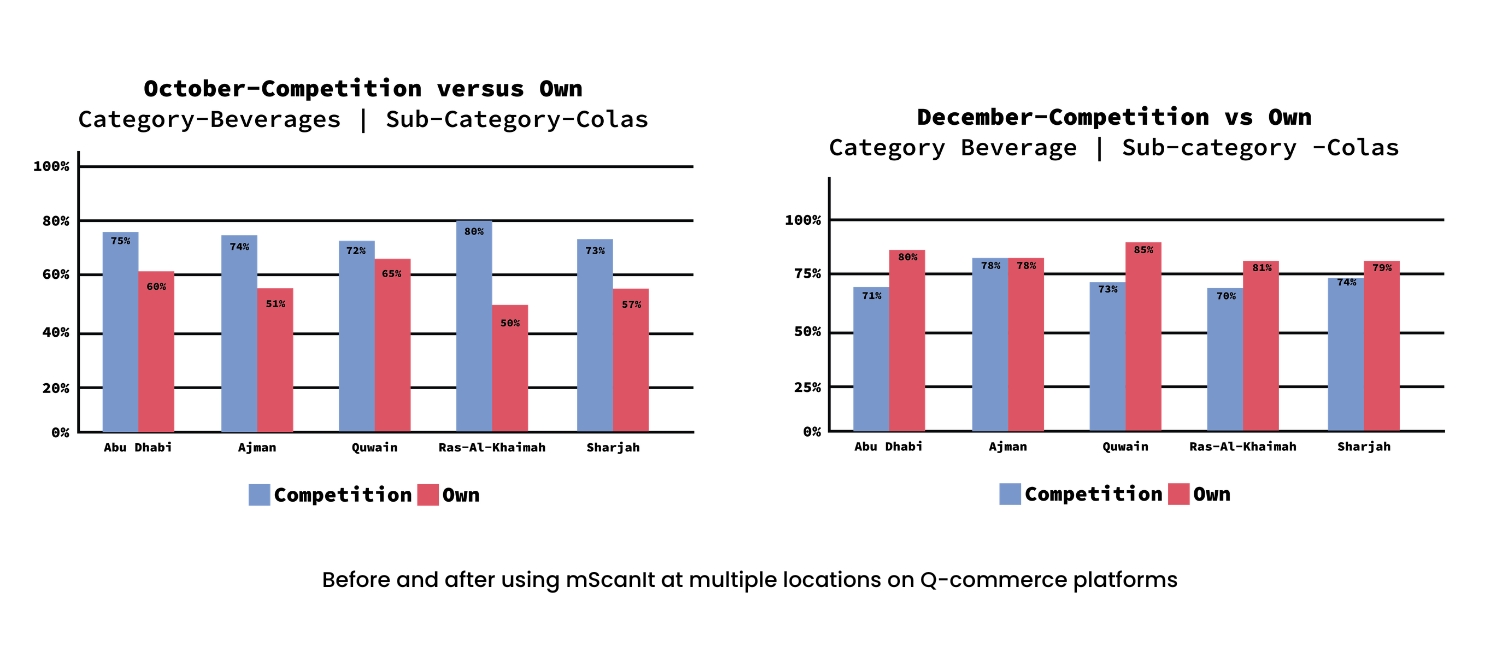
In the UAE market, the brand focused on enhancing availability and improving share of search across platforms like Careem, Carrefour, Noon, and Talabat. Detailed monitoring revealed inconsistent availability across cities and delivery zones. While products appeared present overall, location-wise stock gaps were reducing effective shelf share.
By tracking zip-code level availability and benchmarking against competitors, the team identified where stock lapses were impacting discoverability and conversion potential.
The Intervention
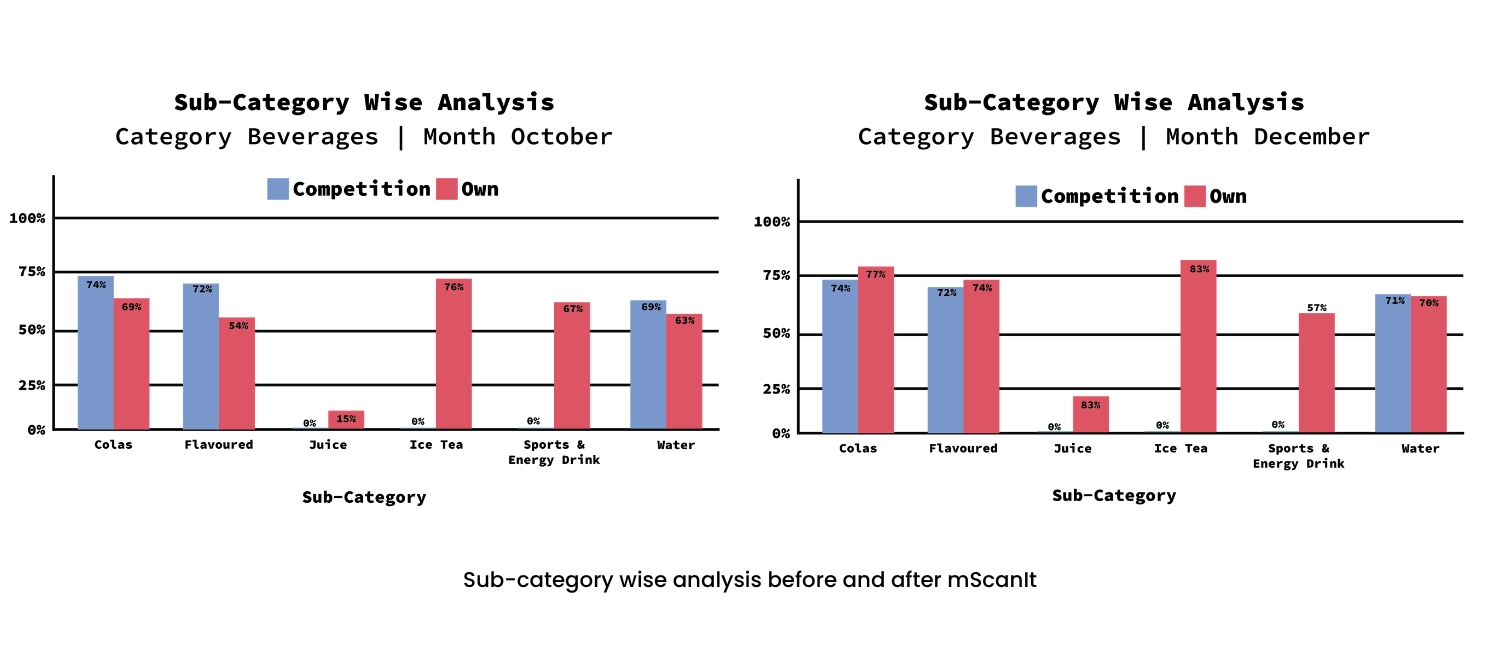
Using a centralized dashboard, the brand began monitoring:
Brand availability trends across platforms
Availability share versus competitors
City-wise and geography-wise performance
Out-of-stock product lists with actionable alerts
This visibility enabled internal teams to act faster on replenishment and optimize platform presence in priority categories.
The Impact
With structured monitoring and proactive action, the brand achieved approximately 41% growth in availability share across platforms. Improved dark-store level monitoring reduced stock gaps and strengthened shelf competitiveness.
By closing availability gaps and enhancing share of search, the brand ensured its products remained consistently accessible to shoppers across geographies, improving digital shelf presence and protecting revenue opportunities.
Conclusion
Ramadan is one of the most demanding periods for quick commerce brands in the MENA region. It compresses time, amplifies consumer expectations, and leaves little room for operational errors.
The brands that succeed are not simply faster or louder. They are more aware. They understand how their digital shelf performs in real time, how consumers experience their listings, and where issues arise before customers feel them.
Ecommerce intelligence gives brands the visibility and control needed to navigate it confidently. And in a season where every minute matters, that control makes all the difference.
To know more about ecommerce analytics, connect with our experts now.
FAQs
Why is Ramadan important for quick commerce brands in the MENA region?
Ramadan significantly shifts consumer behaviour in the MENA region, increasing late-night shopping, urgent purchases, and demand for essentials, gifting, and hosting-related products. Quick commerce platforms become primary fulfilment channels during this period, making digital shelf visibility, availability, and delivery reliability critical for capturing high-intent demand.
How can ecommerce analytics help improve share of shelf performance?
Ecommerce analytics tools track keyword rankings, category placements, and competitor visibility across platforms. By identifying ranking drops, new competitors, and content gaps in real time, brands can optimizelistings, adjust promotions, and maintain stronger share of shelf during peak Ramadan traffic.
What metrics should quick commerce brands track during Ramadan?
Brands should prioritize in-stock rates during peak hours, share of digital shelf, rank stability of hero SKUs, location-level availability, and competitive pricing analysis. These metrics provide real-time insight into shelf performance and help teams respond quickly before revenue is impacted.
What are the biggest mistakes quick commerce brands make during Ramadan?
Common mistakes include reactive discounting without competitive context, ignoring location-level stock gaps, relying on delayed reports, and driving traffic without ensuring shelf visibility. These issues become amplified during Ramadan when shopper tolerance for friction is extremely low.
How can brands align paid media campaigns with digital shelf performance?
Running ads without monitoring shelf readiness can lead to wasted spend. By integrating media performance with availability, pricing intelligence, and ranking data, brands can ensure that traffic driven through campaigns converts effectively. A unified view prevents advertising investments from amplifying shelf weaknesses.