
This blog is a look at what changed when structured campaign management replaced manual processes, and what the data showed one month later.
Here’s some background for you.
A fast-growing beverage brand was running keyword and product listing campaigns on Blinkit across multiple cities in India. While the brand had an established product catalogue and a reasonable ad budget, their campaign performance was inconsistent.
To overcome this, the brand adopted a performance marketing management platform to bring structure and intelligence to their campaign and optimization processes.
The result was a 60% increase in revenue within a month. Continue reading further to find out how Unified Ad Manager (UAM) worked.
Three Gaps That Were Holding The Performance Campaign Results Back
Most brands running campaigns manually hit at least one of these problems. This D2C beverage brand was dealing with all three simultaneously.
Campaign inconsistency
Between 6th to 21st November 2025, campaigns were near-inactive for 15+ days, which means effectively zero visibility on the platform during that period. A day without active spend is a day where competitors fill the shelf space.
Limited keyword coverage
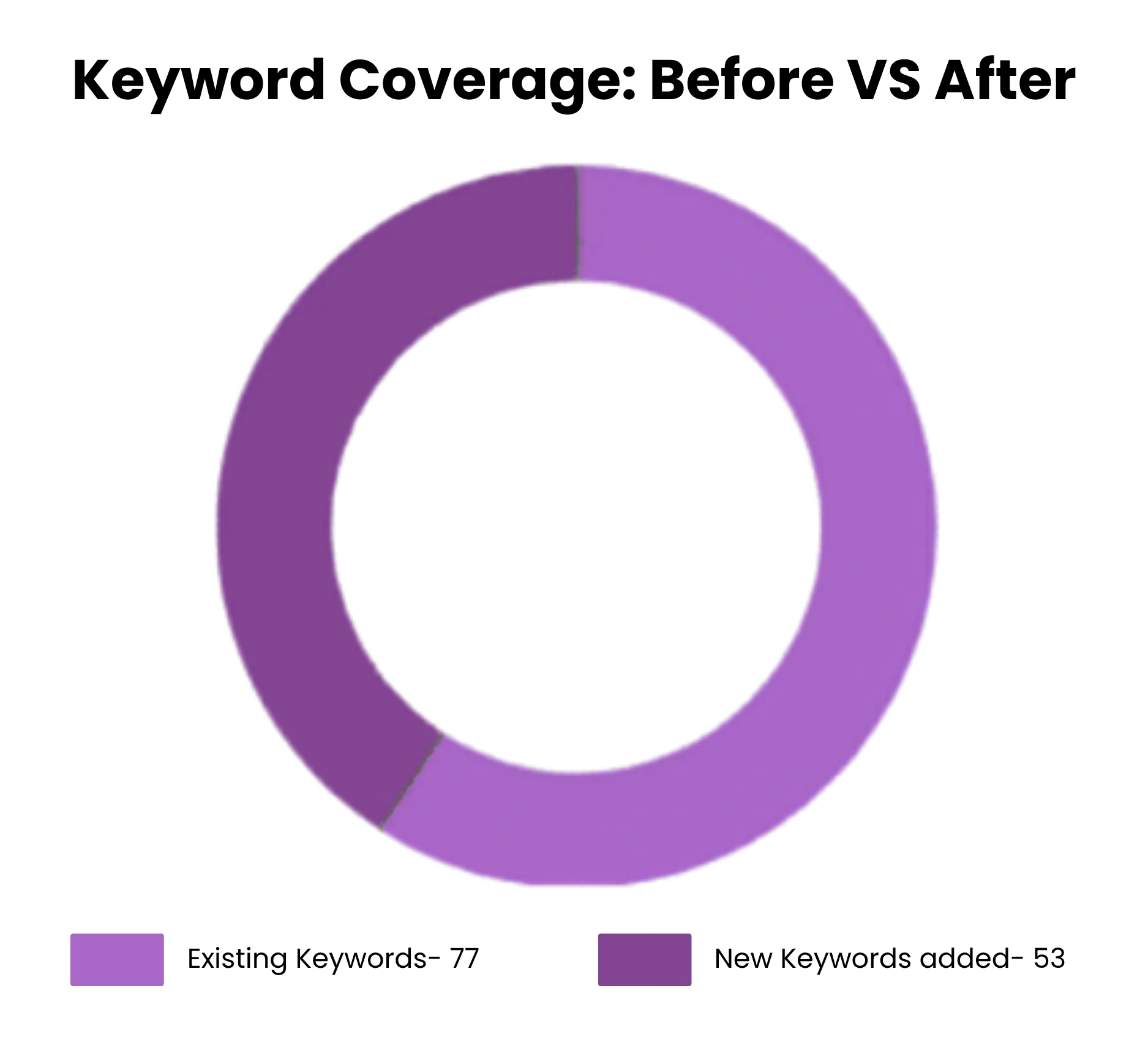
Keyword gaps mean entire search queries go uncontested. Only 77 keywords were active, leaving large portions of search demand for tonic water, mixers, and sodas uncaptured.
High cost per order
An ACoS of 69.2% and ₹189 per order made scaling the campaigns economically difficult to justify. Without time-aware budget pacing, money gets spent during off-peak hours when purchase intent is low.
What Automated Campaign Management Using Unified Ad Manager Changed
The brand adopted mFilterIt’s Unified Ad Manager (UAM), a performance marketing management platform that provides ecommerce analytics in a single view to address the structural gaps across three areas: campaign scheduling, keyword discovery, and bid optimization, with one additional feature that turned out to be the most impactful of all. Here’s how:
Continuous campaign activation
Automated scheduling, dayparting, and budget pacing ensured campaigns ran without gaps every day. The extended blackout periods that had cost the brand significant impression share in November were eliminated entirely. Daily spend remained active and performance compounded week over week as optimizations had time to take effect.
Broader keyword coverage
The keyword discovery capabilities of Unified Ad Manager (UAM) expanded active targeting from 77 to 130 keywords (a 60% increase). The expanded keywords were kept tightly aligned to the brand’s product categories (tonic water, soda water, ginger ale, cocktail mixers), so reach grew without ignoring relevance.
Dynamic bid and budget optimization
The Unified Ad Manager (UAM) also helped the brand adjust bids continuously based on real-time performance signals, rather than keeping all bids static across all keywords. Budget was also systematically reallocated toward product listing campaigns, which delivered stronger ROAS, received a larger share, while product recommendation spend was scaled to a more appropriate level.
The Day-Parting Insight That Showed Major Impact
Of all the changes made between November and December, automated day parting showed significant and measurable results.
In November, spend was distributed without any time-based structure. This meant ad budget was regularly consumed during periods of low traffic, like early mornings when conversion rates were lowest. The ROAS across those campaigns was 0.92x: spend was effectively generating less than ₹1 of revenue per ₹1 spent.
In December, with unified ad management platform, the brand identified evening hours as the peak demand window for quick commerce beverage purchases and shifted 99% of active spend there. The outcome was a ROAS of 1.58x on those campaigns (a 72% improvement), driven not by increasing the budget but by changing when it was used.
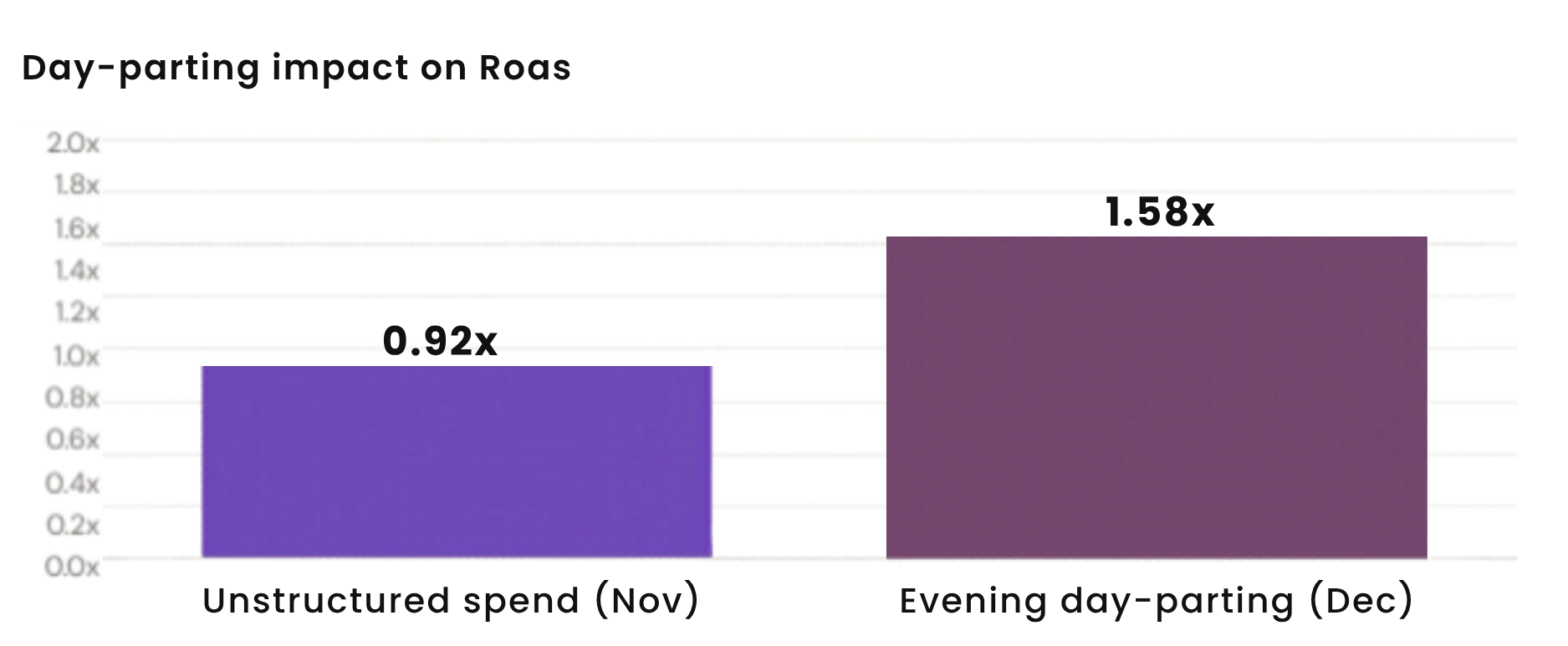
This means the ads were showing at exactly the moment purchase intent was highest, improving both conversion rates and the return on every rupee spent.
The Impact D2C Brand Saw After Leveraging Campaign Management & Insights from Unified Ad Manager
| Metric | Nov 2025 | Dec 2025 | Change | |
|---|---|---|---|---|
| Orders | 1,211 | 2,204 | +82% | |
| Revenue | ₹3.3L | ₹5.3L | +60% | |
| ROAS | 0.92x | 1.58x | +72% | |
| ACoS | 69.2% | 63.6% | −8.1% | |
| Cost per Order | ₹189 | ₹153 | −19% | |
| Active Keywords | 77 | 130 | +60% |
Ad spend grew by 47% month-on-month. Revenue grew by 60%. This gap where revenue outpaces spend is the signature of genuine efficiency improvement, not simply higher investment producing higher output.
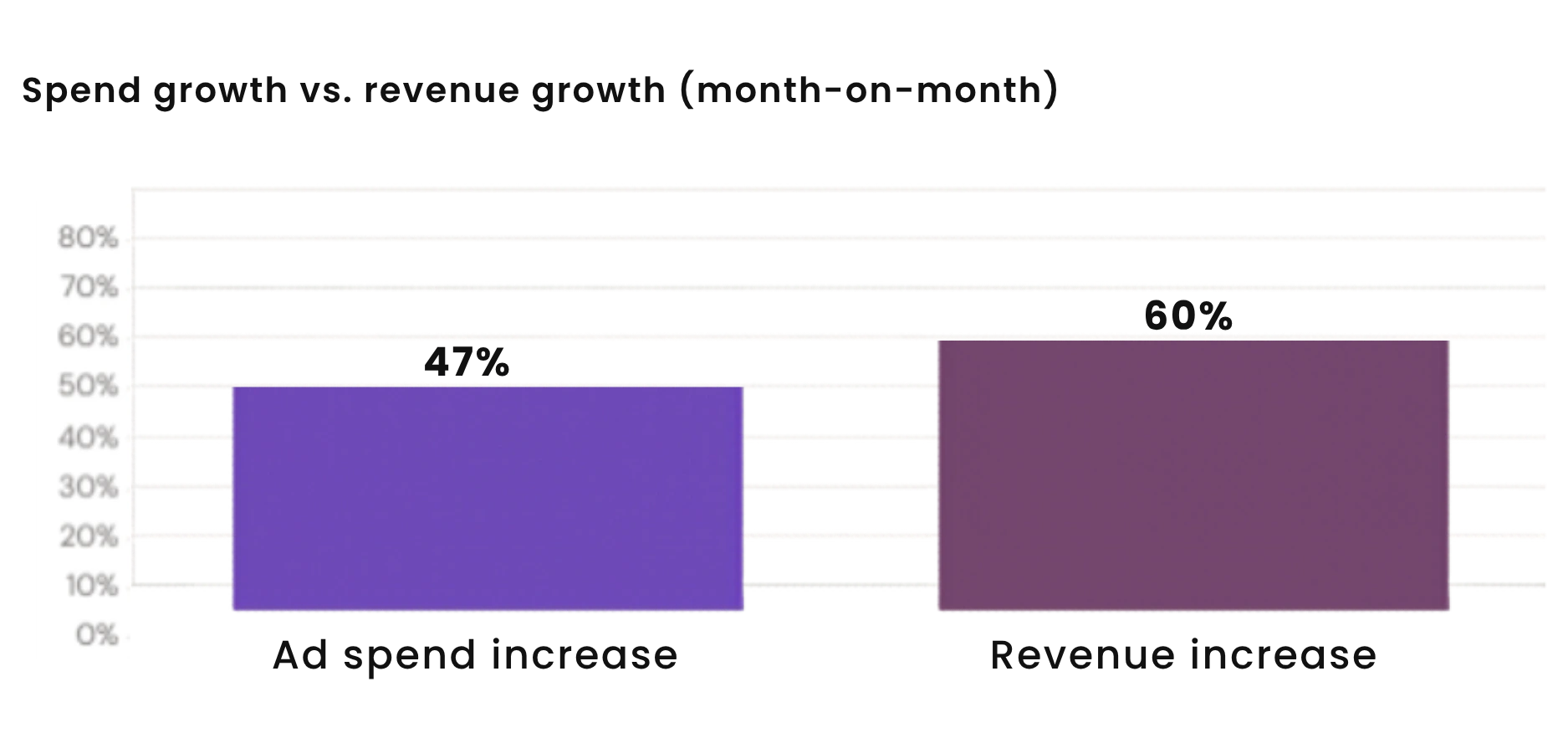
In simple terms, each additional rupee invested in December generated more revenue than it did in November, even as order volumes nearly doubled. This wasn’t just seasonal demand; it points to smarter, more optimized campaign performance.
The same trend is visible in cost efficiency. Cost per order dropped from ₹189 to ₹153 (a 19% reduction) despite operating at twice the scale.
The result: higher volumes, lower acquisition costs, and stronger returns, all at the same time.
Key Takeaways: What Ecommerce & Quick Commerce Brands Actually Get When They Move to Unified Ad Management
The results above are specific to one brand and one platform, but the underlying problems they solved are not. Fragmented campaign visibility, reactive bid management, unstructured budget spend, and keyword gaps are patterns that show up across categories and platforms whenever campaigns are managed manually. Here’s what changes when marketers start leveraging Unified Ad Manager by mFilterIt.
You stop managing campaigns across platforms in silos
A unified interface brings everything together in one place, making it easier to create, update, and monitor campaigns. This reduces operational effort and improves consistency in execution.
Bids adjust in real time, not once a week when someone reviews the dashboard
With dynamic bid management and optimizations, bids are continuously updated based on performance signals like ROAS and traffic trends. This ensures campaigns stay aligned with performance at all times, even beyond working hours.
Budgets start moving towards what’s actually working
A rule-based budget reallocation engine shuffles spend across campaigns in real time, shifting budgets towards high-performing sources and pulling back from lower-ROAS ad types.
AI and ML-based campaign rules replace guesswork or manual decision-making
A custom rule engine lets brands define the conditions under which bids should increase, budgets should be reallocated, or campaigns should pause. It executes those decisions automatically when the conditions are met. This removes the human bottleneck from time-sensitive optimisation and ensures the campaign strategy is actually reflected in live spend, not just in a planning document.
Performance is tracked at the granular level
Keyword-level, campaign-level, and platform-level logs tell you why and where to fix it. Detailed activity tracking across campaign overview, ad group, keyword, and rule engine logs helps in accuratedecision-making to improve campaign efficiency at scale.
Therefore, by bringing structure, automation, and real-time decision-making into campaign management, the brands can grow faster while becoming more efficient at the same time.
Ready to see what our unified ad management platform can do for your brand, category, and platform?
Get in touch with our experts now for a quick demo call.
Frequently Asked Questions
What is a Unified Ad Manager?
A Unified Ad Manager (UAM) is a single platform to create, manage, and optimize ad campaigns across multiple ecommerce channels. It replaces fragmented, platform-by-platform management with centralized control over bids, budgets, keywords, and a consolidated view of ecommerce analytics.
How does day parting work in quick-commerce advertising?
Day parting schedules ad spend to run during hours when purchase intent is highest. Instead of burning budget uniformly across the day, spend is concentrated in peak windows, typically evenings on quick-commerce, improving conversion rates without increasing the overall budget.
What is the difference between ROAS and ACoS?
ROAS tells you revenue earned per rupee spent. ACoS tells you what percentage of revenue went toward ads. Higher ROAS and lower ACoS both indicate a more efficient campaign.
Why does manual bid management fail at scale?
Performance shifts faster than humans can respond. Weekends, peak hours, and high-demand windows get missed. Bids stay static while conditions change, leading to budget waste on underperforming keywords and under-investment in converting ones.
What does an automated campaign management platform do?
It handles bid adjustments, budget pacing, keyword management, and scheduling without manual intervention, ensuring campaigns run consistently, respond to real-time performance signals, and don’t go dark during critical selling windows.
How does AI-based bid optimisation improve campaign performance?
It adjusts keyword bids continuously based on live signals like ROAS and traffic patterns. Unlike weekly manual reviews, it catches shifts as they happen, reducing wasted spend and improving returns incrementally across the full campaign period.
Can one platform manage ads across multiple ecommerce platforms simultaneously?
Yes. A unified marketing platform lets brands run and track campaigns across Amazon, Flipkart, Blinkit, Zepto, Swiggy Instamart, and others from one interface, with consolidated reporting and consistent optimisation logic applied across all channels.