In its March 2026 Global Financial Fraud Threat Assessment, global fraud losses have climbed to a staggering $442 billion.
You still believe your brand is untouched?
Every second, somewhere on the internet, a brand is being impersonated. A customer is being deceived. And a business is losing more than just money; it’s losing trust.
Imagine a fraudster impersonating your brand by using your logo, your colors, and your tone, keeping hawk’s eye on your customers. They camouflage themselves in your brand and your customers see the difference only when it is too late.
The modern fraud ecosystem is growing more sophisticated. Fraudsters are sitting at every touchpoint including the ad your customers clicked on, the website they landed on, and the checkout they trusted.
Every interaction is an opportunity. Fraudsters have known this for years. The question is, do brands know it too?
In this blog, we unpack the many faces of brand fraud and how brands can fight with them.
Breaking Down the Modern Fraud Ecosystem: Types of Online Scams
Financial fraud does not exist in one corner of the room. It is part of a broader and growing digital fraud ecosystem that includes:
Shopping Scams
Where fraudulent websites and social media sellers deceive customers on account of goods that never arrive or are nothing like what was advertised. These spike dramatically during festive sales seasons, exploiting consumer urgency.
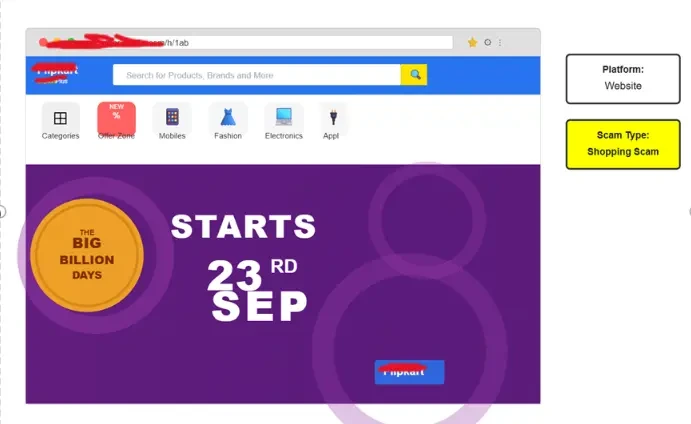
Take this example. This fake website is a near-perfect clone of top ecommerce platform storefront – Big Billion Days banner, product categories, familiar layout and all. It’s a shopping scam designed to take customers’ money for orders that will never arrive.
This is what modern fraud looks like not obviously fake, but deliberately convincing. And when customers realise they’ve been deceived, the reputational damage doesn’t fall on the fraudster. It falls on brands who become they prey of brand impersonation and create ruckus for both brands and customers.
Carding Scams
Under this, stolen credit and debit card details are systematically tested for validity and then sold or used for unauthorised transactions, often available publicly over social media channels.
Job Scams
Fraudsters take advantage of the vulnerability of job seekers by posing themselves as genuine recruiters to extract money or personal data from desperate job seekers. The stolen data travels to a secondary black market, compounding the harm way beyond the initial victim.
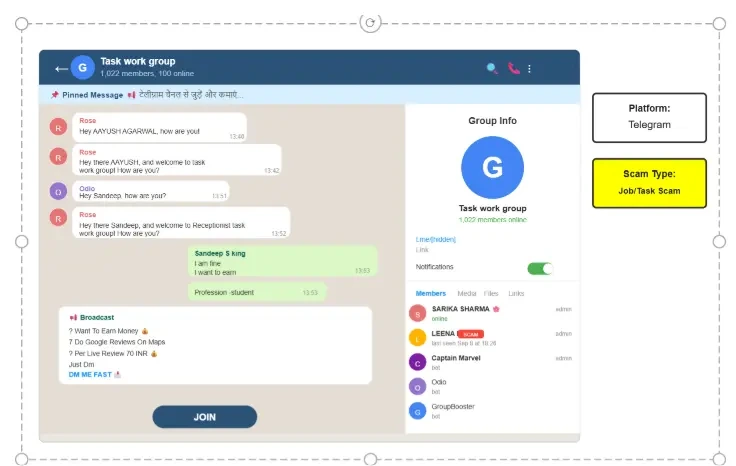
This Telegram channel is a clear example of how scammers use messaging platforms to promote fake task-based earning opportunities. The group tricks users with an easy money tactic, manipulating them to post reviews, like content, or complete simple online tasks. These offers are designed to look easy and harmless, designed especially for students or people looking for part-time income.
At first, scammers may even pay small amounts to build trust. Once users become active, they are often asked to deposit money, share personal details, or complete “premium tasks” that lead to financial loss.
Such fraud groups rely on urgency, easy earnings, and social proof to attract victims.
Read in detail about investment scams
Subscription Scams
Here, fraudsters sell fake or pirated subscriptions to OTT platforms and apps at discounted rates, making both the end customer and brand, its ultimate prey.
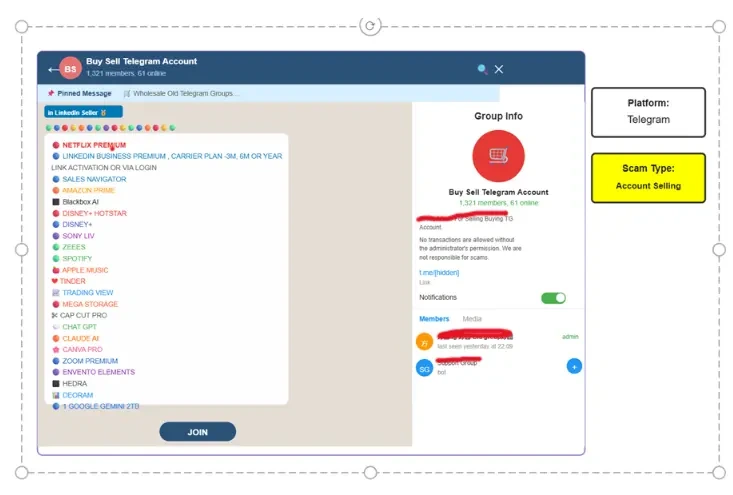
This Telegram channel shows how cybercriminals use online groups to illegally sell digital accounts and subscription access at extremely low prices. These channels often circulate stolen credentials, hacked accounts, or unauthorized shared access for popular streaming and premium platforms.
To appear trustworthy, such groups use large member counts and disclaimers like admins are not responsible for online scams. Innocent users who engage with these marketplaces risk privacy and financial fraud subsequently leading to customer distrust.
Each of these scam types shares a common objective of exploiting the digital equity that brands have built for years, using it as a camouflage to deceive consumers who have no way of differentiating between fake and real.
How Brands can Safeguard Themselves Against Such Online Scams?
When the customer trust comes at stake, it becomes brand’s responsibility to tackle it.
To combat this ecosystem effectively, brands need a multi-layered intelligence and enforcement framework that works across websites, social media, messaging platforms, marketplaces, and ad ecosystems in real time. Here’s what it covers-
Continuous Detection Across Digital Channels
Most fraudulent activity begin with one platform but do not remain there, instead fraudsters travel across platforms such as social media platforms, Telegram groups, WhatsApp chats, malicious websites, app stores, and sponsored advertising campaigns.
A proactive detection mechanism can help brands:
- Identify clone sites, fake stores, and imitation landing pages
- Find scam campaigns that use official branding, logos, graphics, and campaign creatives
- Monitor messaging apps and social media for scamming groups and scam networks
- Identify fake applications, phishing domains, and fake sellers
By doing this, it ensures there is less time for fraudsters to engage in their activities while limiting consumer contact.
Brand Impersonation Detection
Today, most online scams attempt to look credible. Traditional detection based on set rules has become increasingly ineffective. AI-powered systems with visual and behavioral detection capabilities can detect brand imitation even with different domains or altered usernames. This becomes important whenever an organization is experiencing traffic spikes from events like holiday sales, hiring, or product launches.
Fast Takedown and Removal Processes: Merely detecting such threats is not enough. Brands need more enforceable approach that also takes down fraud entities in real time. An effective takedown must include –
- Domain suspension requests
- Fake social profile reporting
- Telegram and messaging-platform abuse reporting
- Counterfeiting
The faster fraudulent assets are removed, the lower the financial and reputational impact on both consumers and brands.
Conclusion
These scams are becoming a serious challenge for brands trying to protect customer trust and their gateways are expanding with every new hotspot.
But these threats can be stopped – without adding operational complexity. With the right fraud intelligence and brand protection solution seamlessly integrated into existing workflows, brands gain end-to-end visibility across the digital ecosystem, enabling them to detect threats early, accelerate takedowns, prevent revenue leakage, protect customer trust, and preserve brand reputation at scale.
Instead of reacting after damage is done, businesses can proactively stay ahead of fraudsters while ensuring safer digital experiences for their customers across every touchpoint.
Take control of your digital presence before scams impact your customers, reputation, and revenue.
Connect with us to strengthen your brand protection strategy.
Frequently Asked Questions
What are the most common types of online scams?
Shopping scams, job scams, carding scams, investment fraud, and subscription scams are among the most common online frauds targeting consumers and brands.
How do fraudsters impersonate brands online?
Fraudsters copy brand logos, websites, ads, and social media profiles to create fake experiences that look genuine to customers.
Why are Telegram and WhatsApp commonly used for scams?
These platforms help scammers quickly spread fake offers, create anonymous groups, and reach large audiences with minimal monitoring.
How can brands detect online scams early?
Brands can use continuous monitoring, AI-powered impersonation detection, and real-time threat intelligence to identify scams across digital channels.
Why is rapid takedown important in fraud prevention?
Quick takedowns help reduce customer exposure, financial losses, and reputational damage before scams spread further.