
Your organic traffic is dropping but do you look for the most obvious reason behind it?
Teams run audits on campaign spends, revisit keyword strategies, and tweak bidding structures. Rarely does anyone open the actual product page and ask the most obvious question – is this page actually doing its job?
When a perfect page analysis is neglected, right information regarding your product doesn’t reach to customers, making them abandon your product before completion.
Suppose a mother visits your product page in order to search for a highly nutritious powder for their children but she did not find the ingredients on the product page, she did not find the measurement per scoop, what will be her quickest action? To explore similar products. There will be no notification regarding abandoned cart or bounce alerts.
This is just one of the many cases that show the importance of perfect page analysis. It shifts the focus from just getting discovered to actually earning the purchase, making sure that when a shopper finds your product, the page does everything it needs to close the gap between interest and decision.
In this blog, we will discover –
- Why optimizing product page is crucial for brands
- 6 product page optimization factors every brand must monitor
- Operational challenges of page optimization
- How product page optimization enhances brand’s product performance
What is the Importance of Optimizing your Product Page?
Page optimization for brands is crucial let’s understand this from an example –
Take a brand managing 200 SKUs across platforms. At any given point, some percentage of those listings have a content issue. Not a catastrophic one but something subtle. A title that drops the primary keyword because a marketplace algorithm reindexed it. A main image that appears blur on a mobile screen.
This is the operational reality that most ecommerce brand teams aren’t built to catch. They are structured around campaigns, not continuous page-level monitoring.
Perfect page analysis runs a continuous check across every live SKU title structure, image compliance, keyword presence and flags drift the moment it happens, not three months later when the rank loss is already real. Because marketplaces are live systems and treating your listings as set-and-done is how you hand over the top slot to someone who simply had a cleaner page on the right day.
Six Product Page Optimization Factors Every Brand Should Monitor
Page analysis is not a one-time thing. It is the discipline of tracking everything that affects whether a shopper finds your product, trusts it, and buys it. That breaks down into six areas based on content and creative parameters that brands must monitor –
Product Title
The title is the first thing both the shopper and the marketplace algorithm read. It needs to work for both. At minimum, a title should clearly mention the product name and the details that matter — size, quantity, variant, measurement unit. A protein powder listed without its weight, or a baby lotion that doesn’t mention the age group, makes the shopper work harder than they should. And when shopping online, most people won’t bother working harder. They will just pick the listing that was clearer.
Content Quality
The description exists to answer questions before the shopper thinks to ask them. What is this? How do I use it? What’s in it? How much do I get? For categories like food, supplements, skincare, or baby products where the purchase feels personal, an incomplete description doesn’t just leave gaps, it creates doubt. Expiry formats, ingredient lists, usage steps, these aren’t optional extras. They are what make a shopper feel confident enough to add to cart. Support images within the description matter too. If they are blurry or don’t add anything to what is written, they are just taking up space.
A+ Content
By the time a shopper reaches A+ content, they’re already interested. What they need at this point is a reason to commit. Comparison charts, related products with rich mediax description. These help shoppers make up their mind faster. The mistake most brands make is treating A+ content as a branding exercise. It isn’t. It is the last conversation you have with a shopper before they decide. Make it count.
Visuals
Shoppers look at the image before they read anything else on the page. A blurry thumbnail or a cluttered hero image can end the consideration right there before the title, before the price, before anything. And platform standards change. An image that worked fine two years ago may not clear compliance checks today. A visual that looks sharp on desktop may render poorly on a phone screen. Visuals aren’t a one-time job. They need to be revisited the same way any other live content does.
Ratings and Reviews:
A 4-star rating or above builds trust quickly, especially for a first-time buyer who knows nothing about the brand. But the number alone isn’t enough. The actual reviews tell you what is working and what isn’t. If multiple customers mention confusing instructions or damaged packaging, that’s a signal both for the product and the page. Customer-uploaded review images also matter. These are unfiltered, real-world photos of your product. If they consistently look off or don’t match what the brand imagery shows, no amount of polished A+ content will make up for it.
How Product Page Optimization Enhances Brand’s Product Performance
Product page optimization is one of the most effective strategies that many brands of various categories know. mFilterIt ran a deep-dive category analysis on the Atta segment on Flipkart Grocery. What the data revealed was striking, some of India’s most recognisable FMCG names are being outpaced on digital shelves by brands that simply optimise better.
What did the PDP Audit Track?
- Support Images – Number, quality, and variety of images beyond the primary product shot.
- Video Presence – Whether a product video exists on the listing. Video-enabled PDPs consistently see higher dwell time and improved add-to-cart rates.
- Description Length – Depth and completeness of written content. Thin descriptions signal low relevance to platform algorithms and fail to address shopper intent.
Key Findings: Overall Brand’s Content Score for last 3 months:
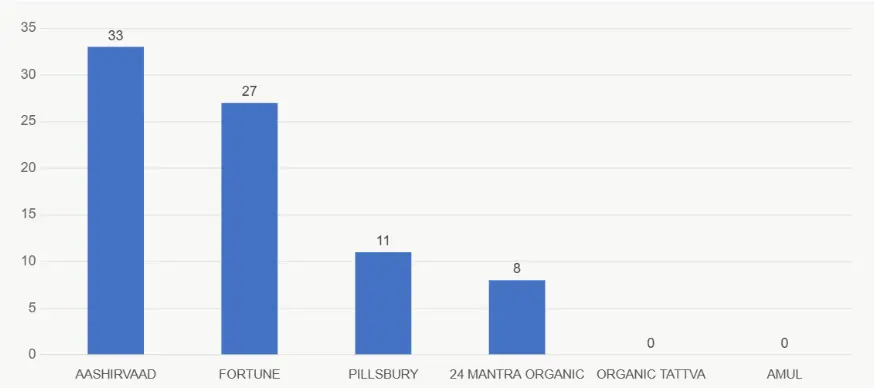
These scores do not just highlight the basic content errors but the real content gaps that were creating major challenges in listings. This data highlights categories based on which their product page was analyzed including and the highlights were-
- The analysis revealed a clear divide between how category leaders and other established brands approach their product pages. Brands such as Aashirvaad, Fortune, and Pillsbury consistently delivered more complete and informative product experiences, with stronger content across key PDP elements.
- In comparison, listings from Amul, Organic Tattva, and 24 Mantra Organic showed noticeable gaps in content depth and shopper-focused information. These shortcomings may seem minor in isolation, but across a crowded marketplace, they can reduce a product’s ability to capture attention, answer shopper questions, and compete effectively for conversions.
Categories Covered During Analysis
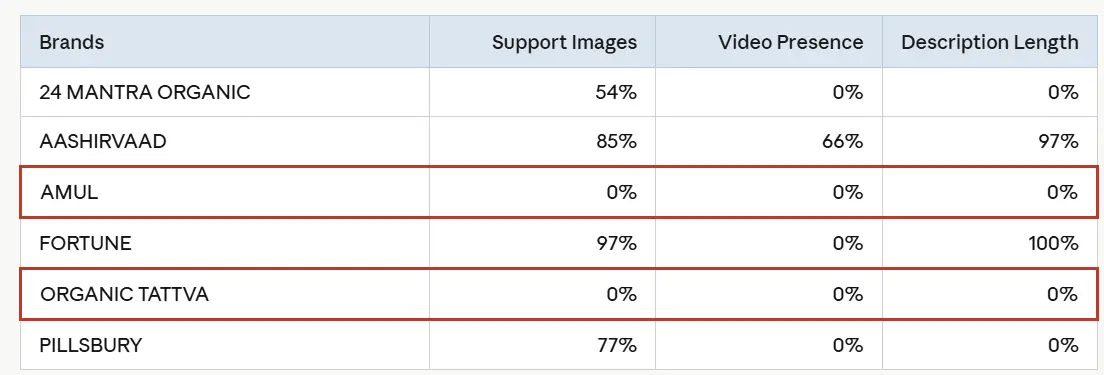
Following were some of the categories on which brands like Aashirvad, 24 Mantra Organic, Fortune, and Pillsbury were ruling whereas big names of the market scored zero.
This is exactly why product page optimization is no longer optional. Every element of a product page influences how shoppers perceive, evaluate, and ultimately choose a product.
Where This Is Going And Why It Matters Now
The platforms themselves are evolving in ways that raise the stakes.
Predictive content optimization is already emerging as the next frontier with AI models that flag potential ranking drops before they happen, based on early signals in review sentiment, competitor content moves, and algorithm pattern changes. The content of your product page decides if it can persuade your customer or make them go away. This is the transparency you get with our e-commerce intelligence solution that takes your product up to full potential with the right content optimization.
Ready to uncover what’s holding your product pages back? Talk to us today.
Frequently Asked Questions
What is page analysis?
Page analysis is the process of evaluating product listings to identify issues affecting visibility, discoverability, customer experience, and sales performance.
Why is page analysis important for eCommerce brands?
It helps brands uncover hidden listing issues that can reduce search rankings, lower conversions, and lead to lost sales.
What factors are analysed in a product page?
Key factors include content quality, images, ratings and reviews, pricing, Buy Box ownership, availability, and share of search.
What are the common challenges in page analysis?
Brands often struggle with monitoring large SKU catalogs, managing cross-team ownership, and detecting listing issues in real time.
How does page analysis improve business outcomes?
By optimizing product pages, brands can increase visibility, improve conversions, protect revenue, and strengthen marketplace performance.