
The BFSI sector runs some of the most high-stakes digital campaigns in advertising. With customer lifetime values stretching across years of loans, credit cards, investments, and insurance renewals, every lead matters enormously. But that’s precisely what makes BFSI such a lucrative target for fraud.
Performance campaigns in BFSI are built around a simple promise: pay per lead, optimise for cost per acquisition. It’s efficient in theory. In practice, it’s where exploitation begins. Because a bad click isn’t just a bad click — it travels downstream, pollutes the funnel, and contaminates every stage below it. Fake clicks become fake leads. Fake leads inflate CAC. And inflated CAC quietly bleeds campaign budgets dry.
This blog covers –
- Why BFSI Brands Are Prime Targets for Lead Fraud
- Average Bot Traffic on BFSI Campaigns
- The Invisible Journey of Lead Fraud in BFSI
- How Lead Fraud Impacts BFSI Campaigns
- Why Surface Level Detection Falls Short
- What Smarter Click Fraud Detection Looks Like in BFSI
- Conclusion
Why BFSI Brands Are Prime Targets for Click Fraud
Few industries spend on digital ads as aggressively as banks, insurers, fintechs, and financial services. The reason is clear: customer value in BFSI is unusually high. Hence the cost running campaigns is higher.
- A single customer can generate returns for years through loans, credit cards, investments, insurance renewals, or financial subscriptions.
- Because of this, keywords like “instant loan,” “credit card instant approval,” “trading app,” and “term insurance” often carry some of the highest CPCs in digital advertising.
- For fraudsters, that creates a perfect setup. The higher the cost per lead, the more profitable fake leads become.
Fraud networks know BFSI brands can’t slow acquisition cost, especially during festive seasons, loan drives, tax-filing months, or insurance renewals. That’s why BFSI campaigns often attract unusually high levels of invalid traffic, fake installs, and manipulated engagements across both web and app ecosystems.
What makes it worse: today’s fraudulent activity rarely looks obviously fake. It blends into normal user behaviour, making detection far harder than before.
The Scale of the Problem: Bot Traffic on BFSI Campaigns
On BFSI campaigns, bot and invalid traffic routinely accounts for a significant share of total traffic often sitting well into double digits.
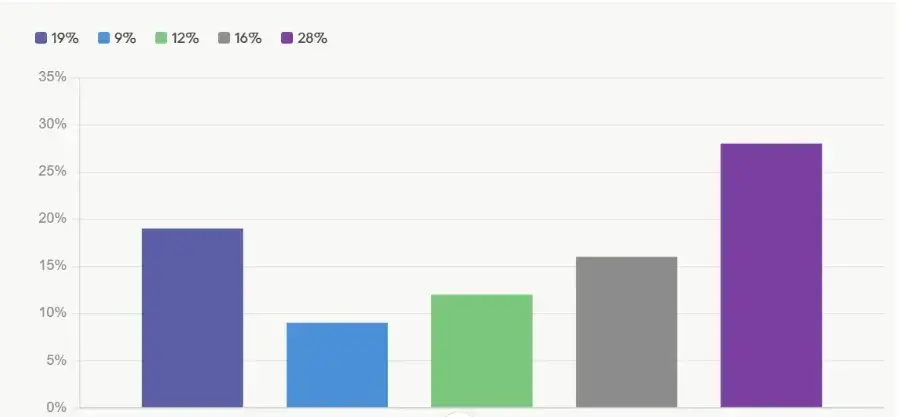
The above table reveals a far more serious reality for BFSI advertisers globally.
Bot traffic for different BFSI campaigns ranged from 9% to 28% of total campaign traffic. It is not a minor inefficiency; it contributes to click fraud and later contributing to lead fraud, a massive setback for brands.
In BFSI, losing nearly one-fourth of campaign traffic to bots means brands are potentially pouring millions into fake engagement, distorted performance metrics, and audiences that never truly existed.
The Invisible Journey: How Click Fraud Becomes Lead Fraud in BFSI
BFSI marketers are accountable for metrics that sit deep in the funnel:
- Cost per approved loan
- Cost per activated credit card
- Cost per funded account
- Cost per issued policy
These aren’t click metrics. They are business outcomes. Which is exactly why click-level fraud gets missed for so long, it enters at the top and the damage only becomes legible at the bottom, by which point the cause is buried under months of campaign data.
The journey looks like this:
Impression → Fraudulent Click → Fake Lead → Inflated CAC → Low Conversion → Revenue Gap
Three Ways the Funnel Gets Exploited
Fake Leads
Bots or traffic farms fill out lead forms with fabricated or recycled personal data. These submissions pass basic validation — name, phone, email format checks — but carry no intent. They exist only to trigger the publisher’s payout.
Punched Leads
More deliberate than bot-generated fakes. Publishers or affiliates manually manufacture form fills, sometimes using real personal data sourced from other lists, to meet contractual lead volume targets. These are harder to filter because they look human. They fail at sales qualification, not at form submission.
Attribution Fraud – Click Spamming, Click Injection, & Cookie Hijacking
These two tactics specifically target app-based BFSI campaigns and they operate differently.
- Click spamming is probabilistic A malicious app running silently on a device floods attribution systems with fake click signals across many publisher IDs. The bet: if a user eventually installs a banking or investment app organically withing the time period of attribution window, there is a fraudulent click already logged that will claim credit. The conversion happened legitimately. The payout goes to a fraudster.
- Click injection is surgical. Malicious apps on a device monitor signal that announce when another app is downloading. The moment a fintech app begins installing, the malicious app fires a fake click, timed to arrive in the attribution window milliseconds before install completes. It hijacks attribution with near-perfect timing. Detecting it requires comparing click timestamps against install timestamps at a resolution most attribution setups don’t maintain.
- Cookie Hijacking targets web-based journeys. Fraudsters manipulate, overwrite, or drop tracking cookies on a user’s browser shortly before a conversion occurs. When a customer later completes an application, account opening, or purchase, the attribution system incorrectly credits the fraudster’s affiliate, publisher, or traffic source instead of the channel that genuinely influenced the conversion. The user action is real, but the attribution trail has been tampered with, diverting marketing spend and performance credit away from legitimate partners.
Read More About Cookie Hijacking: The $14.8B Fraud
What This Fraud Actually Costs BFSI Campaigns
Fraud traveling from clicks to leads impacts brand’s campaigns in all the wrong ways. This is how the impact appears when the funnel is polluted –
- CAC climbs and the diagnosis is wrong. When fraudulent traffic inflates lead volume without producing conversions, CAC rises. The instinctive response is to increase spend, broaden targeting, test new creatives, making it worse. The problem is not the campaign strategy. It’s that a portion of the traffic was never real.
- Budget burns against a cap, not an audience. Daily spend limits get consumed by invalid clicks. Real users, the ones a campaign was built to reach, simply don’t see the ads because the budget is exhausted. Reach shrinks precisely when a brand thinks it’s scaling.
- Optimisation algorithms learn from bad data. This is the damage that persists longest. When a meaningful share of conversions reported to a bidding algorithm came from fraudulent or incentivised traffic, the algorithm optimises toward replicating that traffic. Smart bidding gets trained on dumb signals. Campaign performance degrades structurally, not just in a bad week.
- Compliance exposure. In BFSI specifically, lead data doesn’t just sit in a CRM. It flows into KYC pipelines, credit assessment queues, and underwriting systems. Fabricated or misappropriated personal data entering those systems creates regulatory risk that exists well outside the marketing team’s visibility.
Why Surface Level Detection Falls Short Now
Surface level detection falls short as fraud enters the entire funnel, this is why they fall short –
- Fraudsters now route traffic through real home internet connections, so geolocation and ISP checks return clean results.
- Bots replicate human browsing behaviour closely enough that engagement metrics scroll depth, time-on-page, session length look normal.
- Device farms use actual handsets operated by real people, so the signal is genuinely human; only the intent is fake.
- And with SDK spoofing, fraudsters manufacture installs and hijack last-click attribution, without ever touching a real device or running a real campaign.
What Smarter Click Fraud Detection Looks Like in BFSI
The fight against fraud is no longer about blocking obvious bots. Today’s fraud is smarter it mimics real users, making it difficult to detect through traditional filters.
To stay ahead, brands need advanced ad fraud protection powered by both click-level and lead-level intelligence, giving them complete visibility into every interaction before budgets are wasted.
Fraud leaves traces in behaviour, not just identity. These are the layers that catch it:
- Device fingerprinting – Builds identity from hardware configs, OS versions, and browser environments. Fraudsters can rotate emails and phone numbers; device signatures repeat anyway.
- Deterministic checks – Flags known bad signals: suspicious IPs, repeat submission cookies, browser metadata that doesn’t match the claimed environment. Filters high-volume, low-effort fraud before it enters the pipeline.
- Heuristic checks – Catches what rules miss. Click patterns with no variance, interaction timings outside human range, browser identities that rotate too cleanly, individually inconclusive, collectively damning.
- Click-to-install timing analysis – Click injection has one structural flaw: the millisecond gap between a fraudulent click and an install is physically impossible for a real user to produce. Retaining timestamp data at that resolution makes it catchable.
- Source-level transparency – Identifies which publishers, placements, and attribution paths are generating suspicious traffic, so budget decisions are based on actual lead quality, not reported volume.
Conclusion
For BFSI brands, fraud is not confined to just fake clicks. It affects the entire campaign journey; from impressions to final conversions. Evaluating each stage separately often hides the real problem, allowing fraudulent activity to keep draining budgets in the background.
What brands need today is deeper visibility across the complete campaign cycle. The visibility that identifies unusual behaviour early, filters invalid traffic, and understands where engagement is actually coming from without making you juggle between multiple tabs.
If you want your next BFSI campaign to drive real customers instead of draining budgets on fake clicks followed by fake leads, now is the time to act.
Connect with us to ensure your ad spends reach genuine users
Frequently Asked Questions
How do click farms steal BFSI ad budgets?
Click farms use real devices and people to interact with ads repeatedly, making fake traffic appear genuine and draining campaign budgets.
How can insurance and fintech brands reduce click fraud?
By monitoring abnormal clicks, suspicious devices, fake geographies, and low-quality traffic sources before they impact campaign performance.
Why is click fraud a bigger problem for BFSI brands?
Because BFSI campaigns have very high CPCs, even a small percentage of fake clicks can lead to major budget losses.
How can brands detect lead fraud?
Common indicators include duplicate entries, invalid contact details, unusually fast form submissions, suspicious device activity, and low lead-to-conversion rates.
Why is lead fraud a concern for BFSI brands?
Lead fraud wastes acquisition budgets, reduces campaign efficiency, burdens sales teams with poor-quality leads, and distorts performance reporting.